General
New Week Planner (Beta)
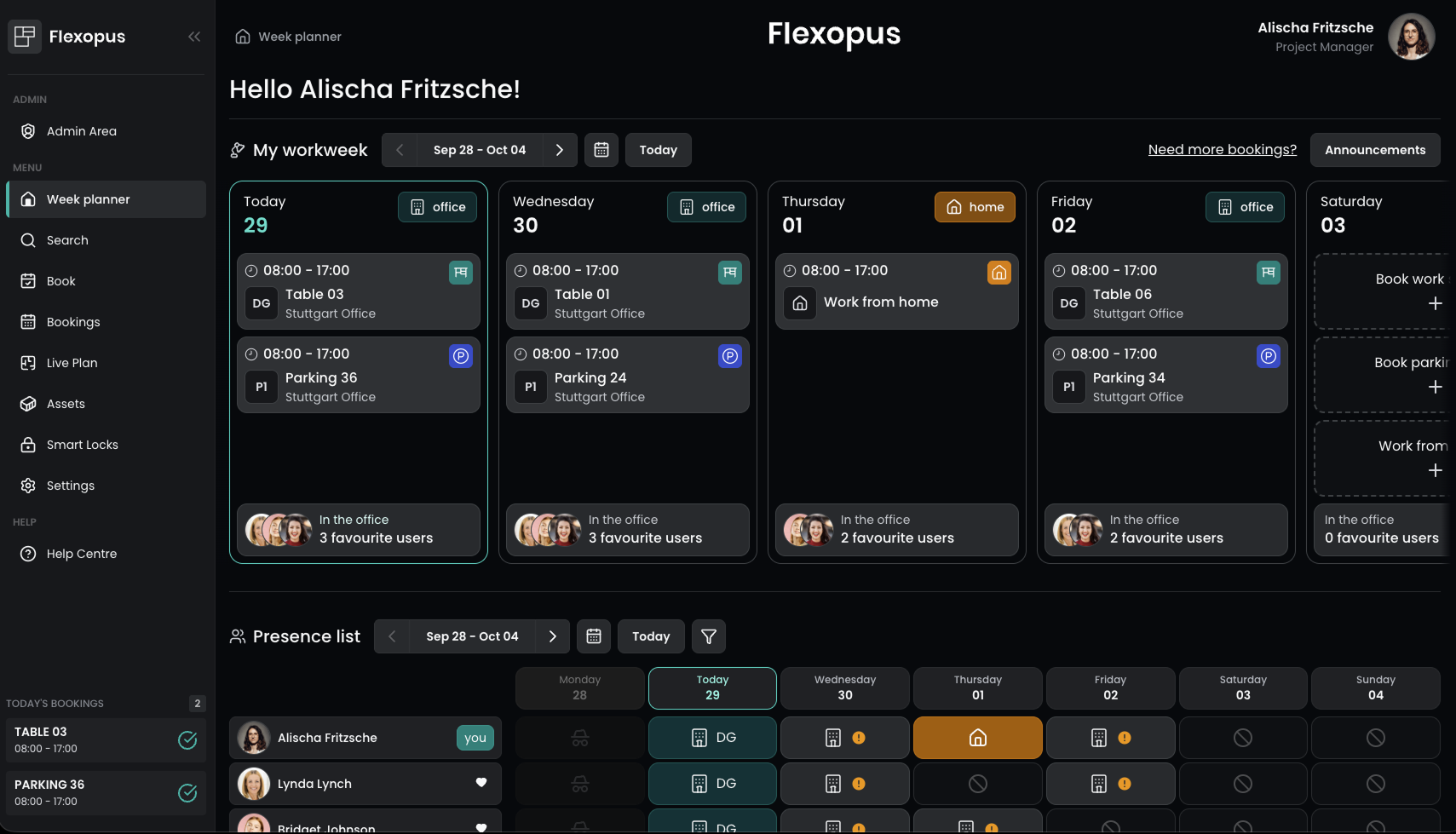
We’re excited to introduce our new Week Planner, giving users a faster and more convenient way to manage their everyday workplace bookings.
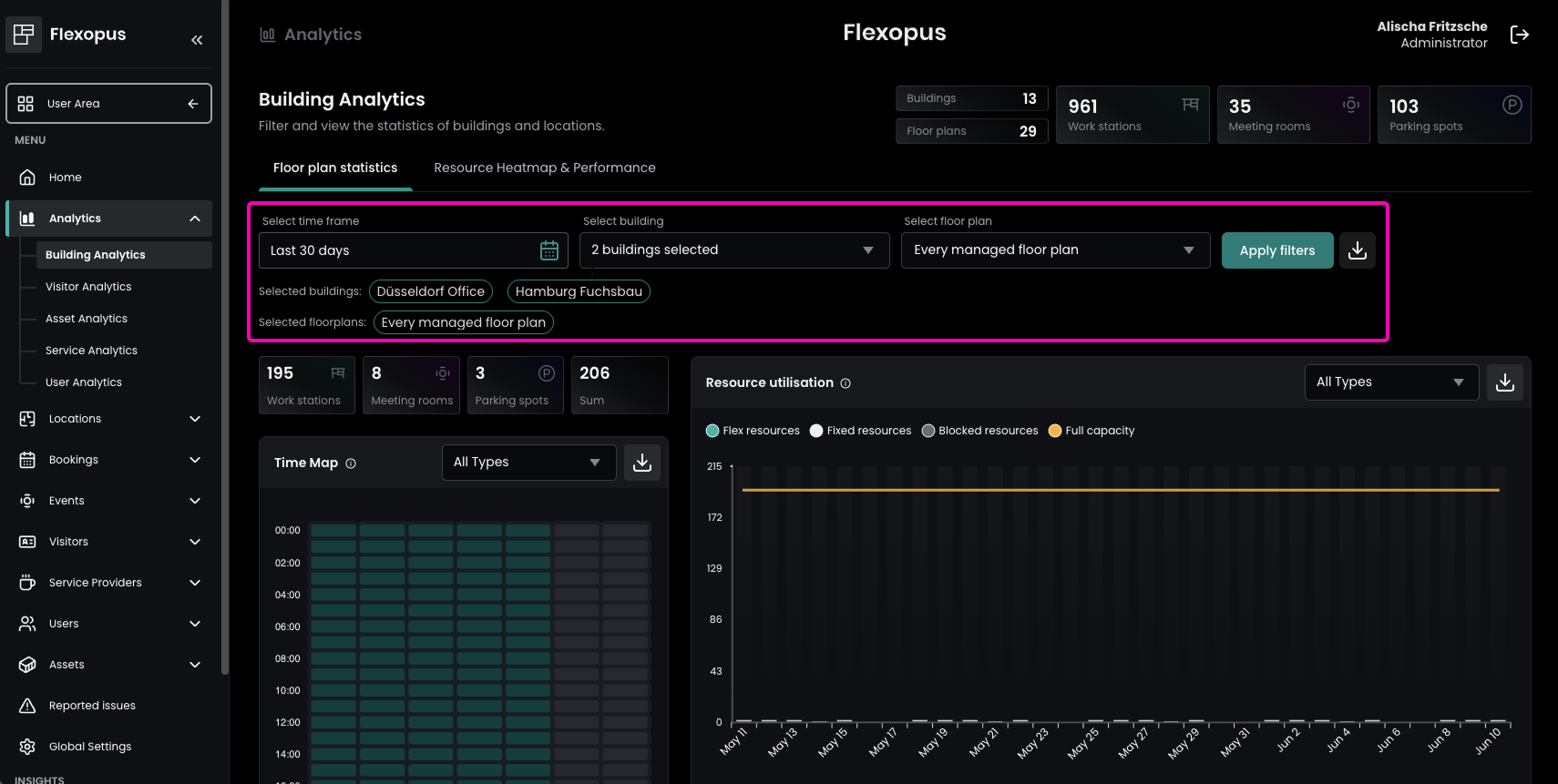
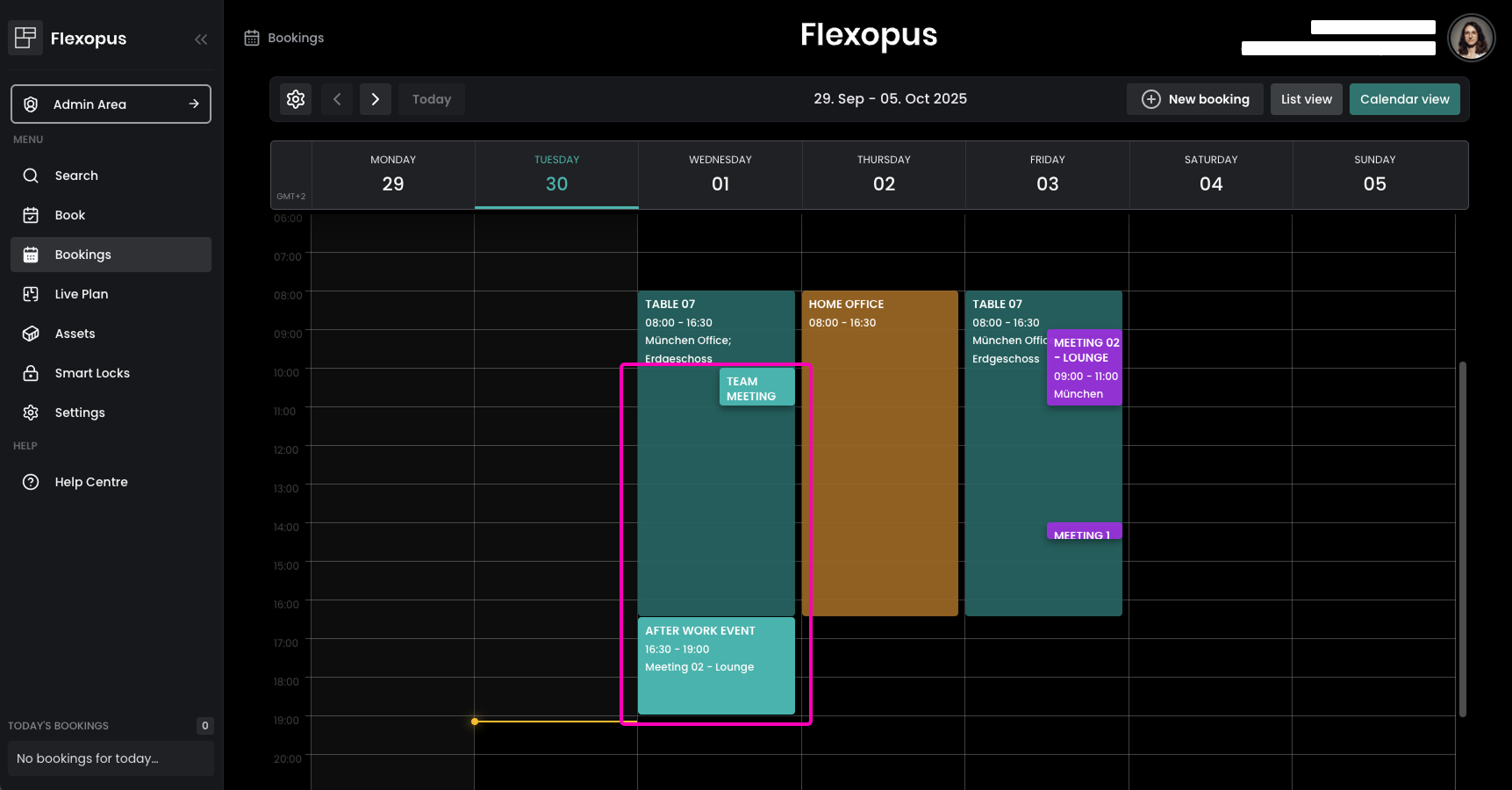
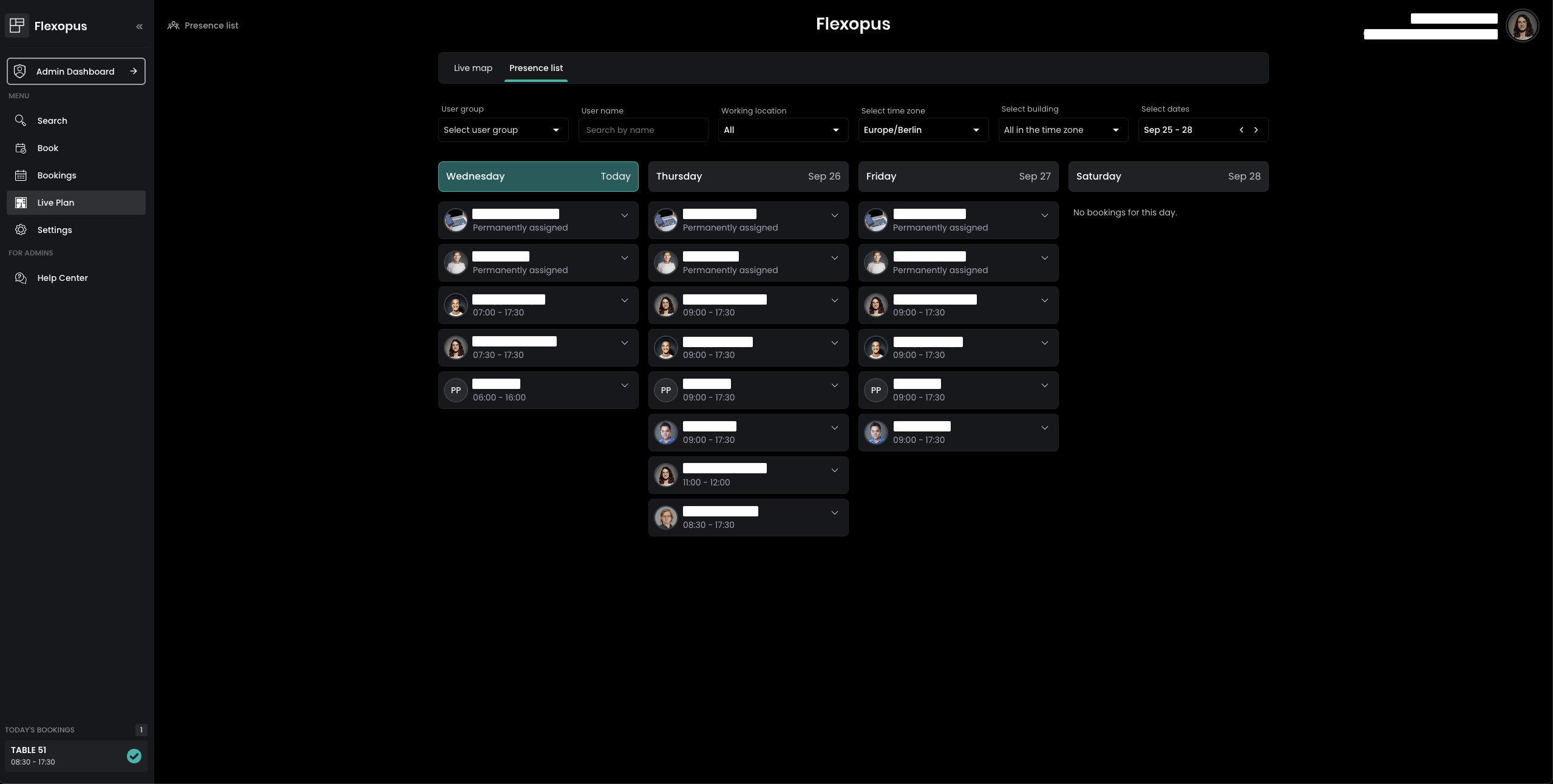
The new Week Planner provides users with a central overview of their upcoming bookings and shows how many of their favorited users are scheduled to be in the office on each day. This helps users quickly identify the perfect office days to collaborate with their team and spend time together in the office.
Workspaces, parking spots, and Home Office can also be booked directly from the Week Planner with just one click.
By clicking the magic wand icon next to the booking options, users can instantly book one of their favorite resources for the selected day. Announcements from buildings are also displayed directly on the Week Planner, ensuring that relevant location-specific information is always visible.
Building-Specific Announcements
Keeping users informed about what is happening at their office location just got easier with building-specific announcements.
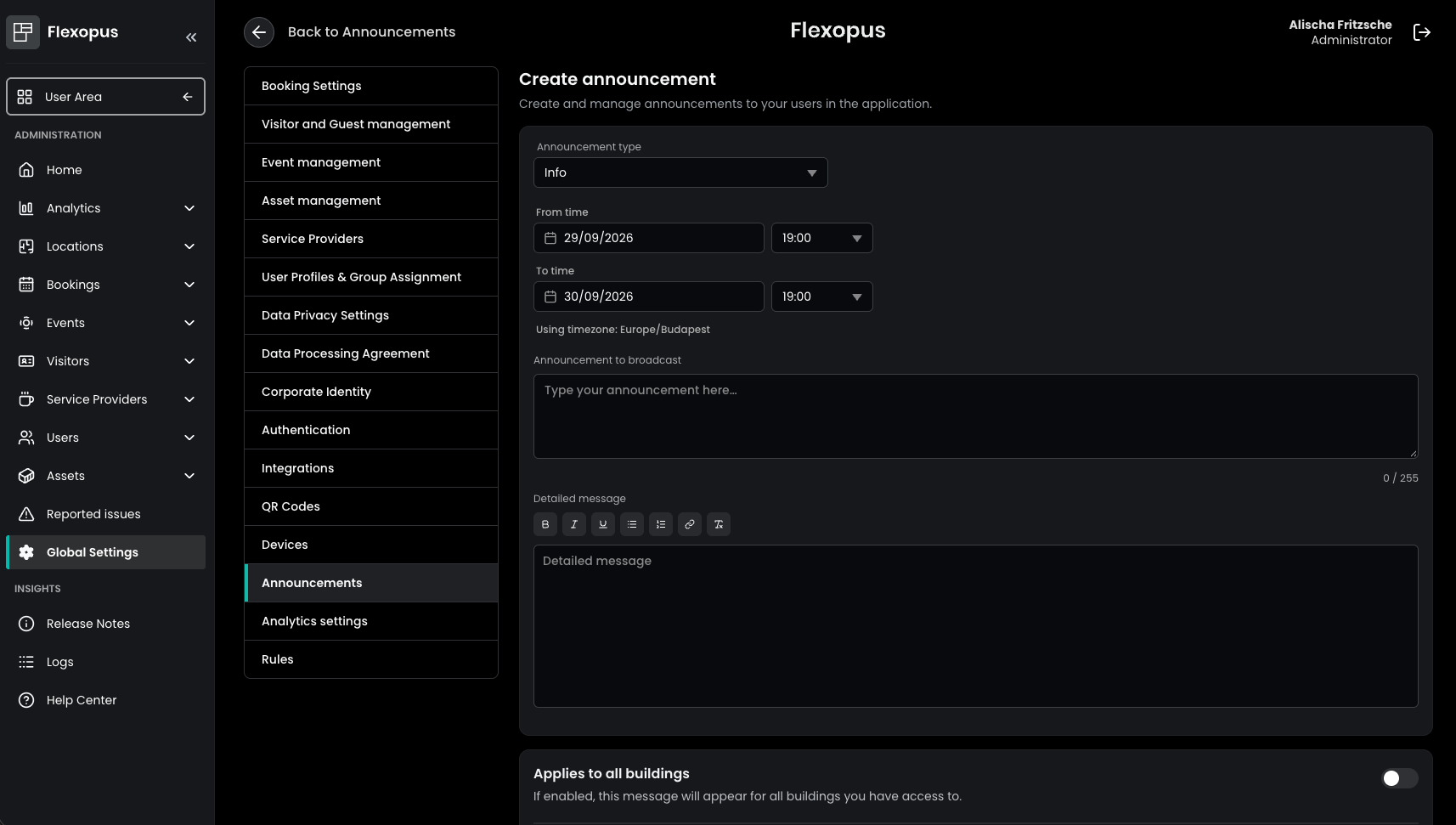
Administrators can now create announcements for individual buildings and communicate location-specific information directly to the relevant users.
The feature is available in the Admin Area under Global Settings → Announcements. When selecting Create message, administrators can choose whether the announcement should be assigned to specific Buildings or displayed as a general Banner announcement.
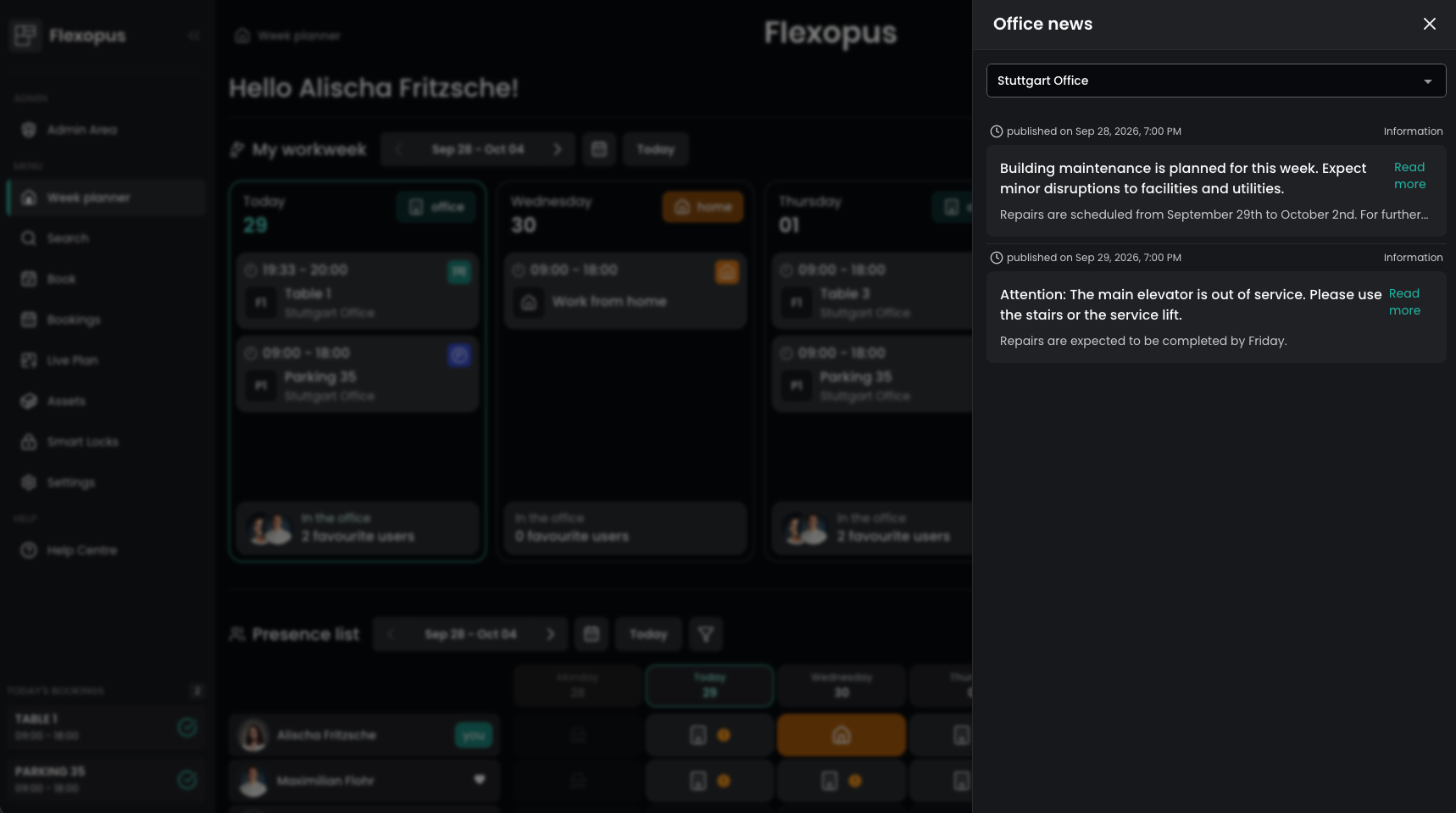
Building-specific announcements are displayed on the new Week Planner. This ensures that office updates, maintenance information, or other location-specific messages reach the users they are relevant to.
Automatic Department-Based Group Assignment
Managing department-based user groups just got significantly easier with automatic group assignment.
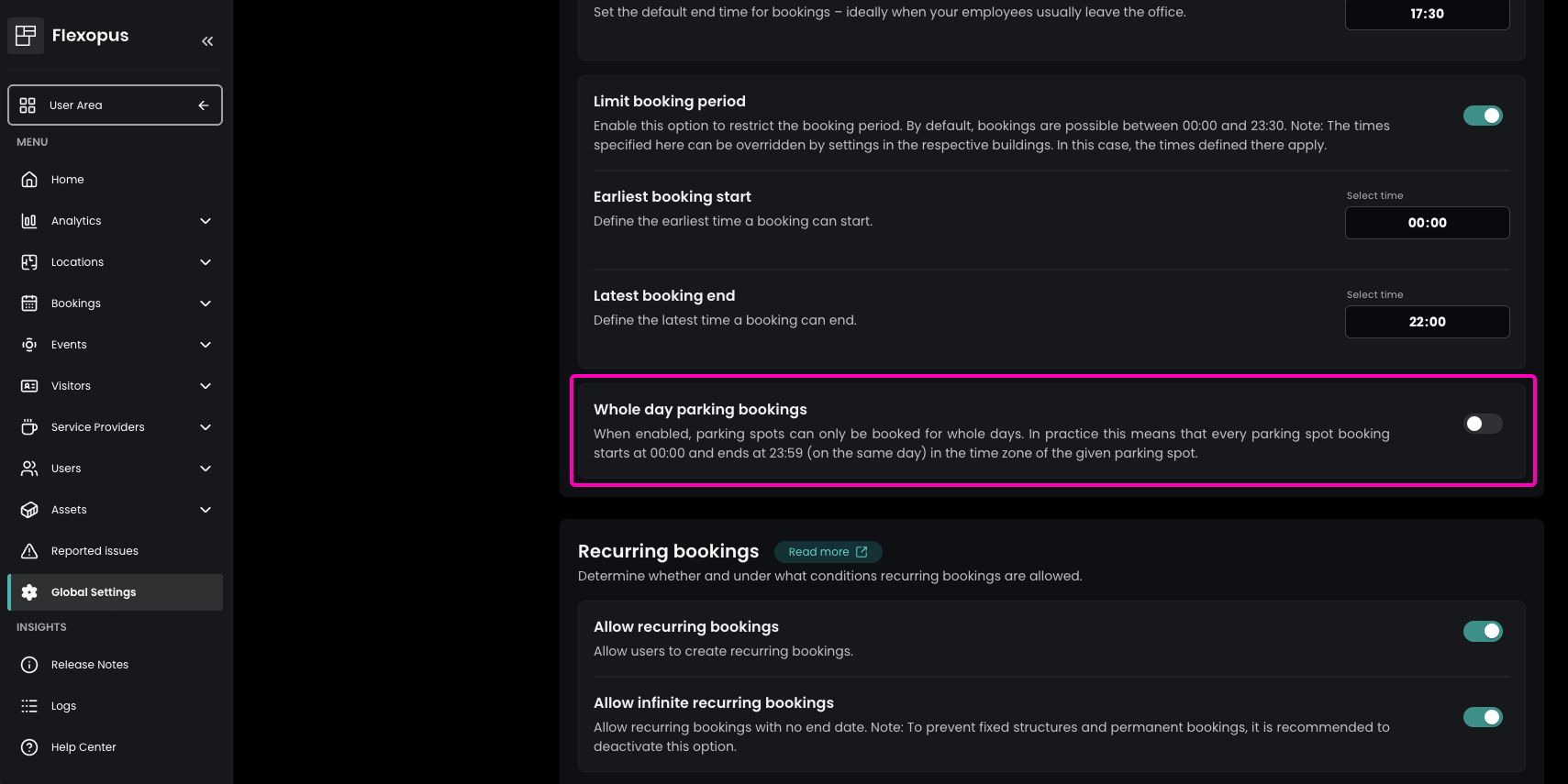
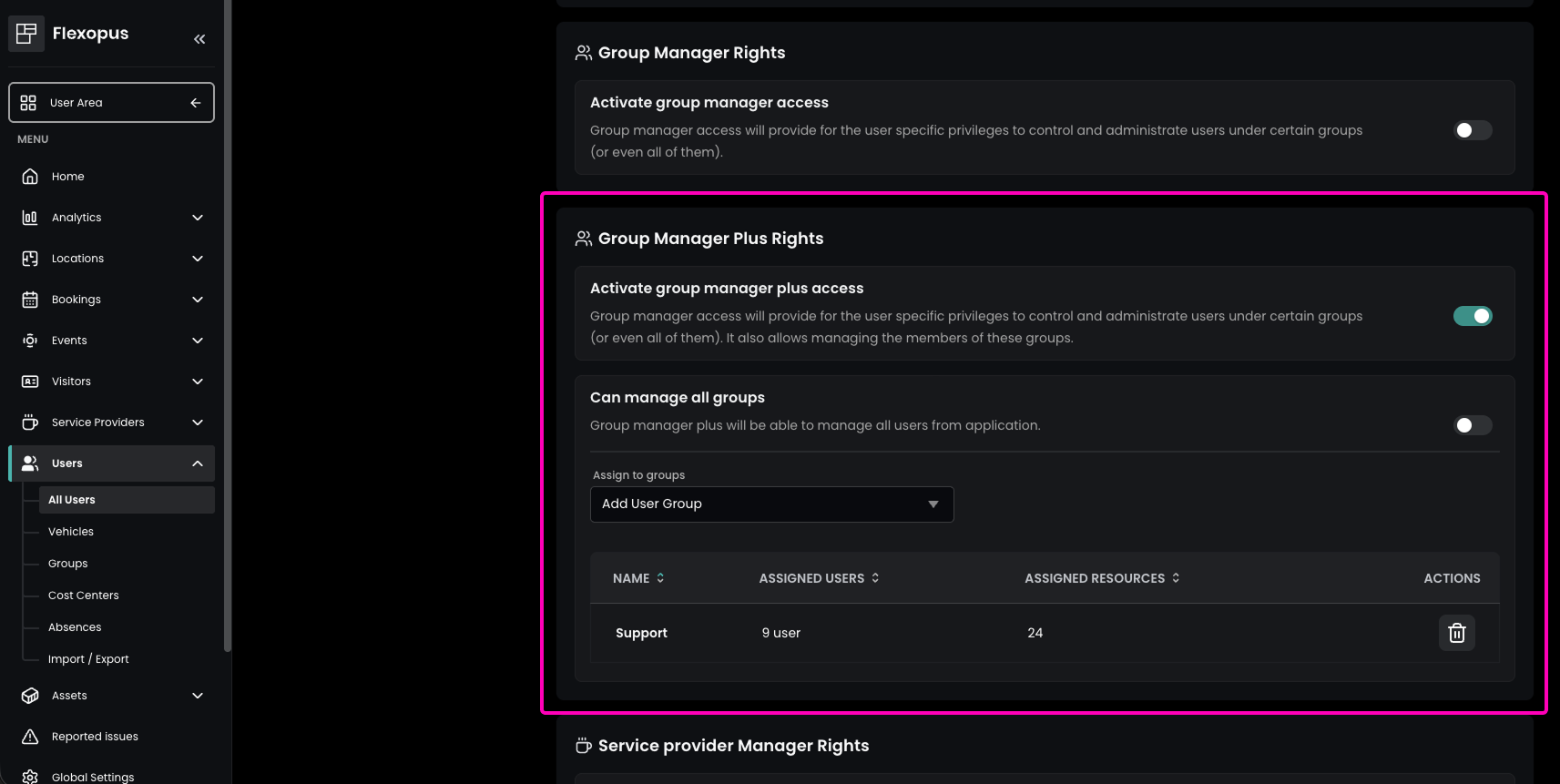
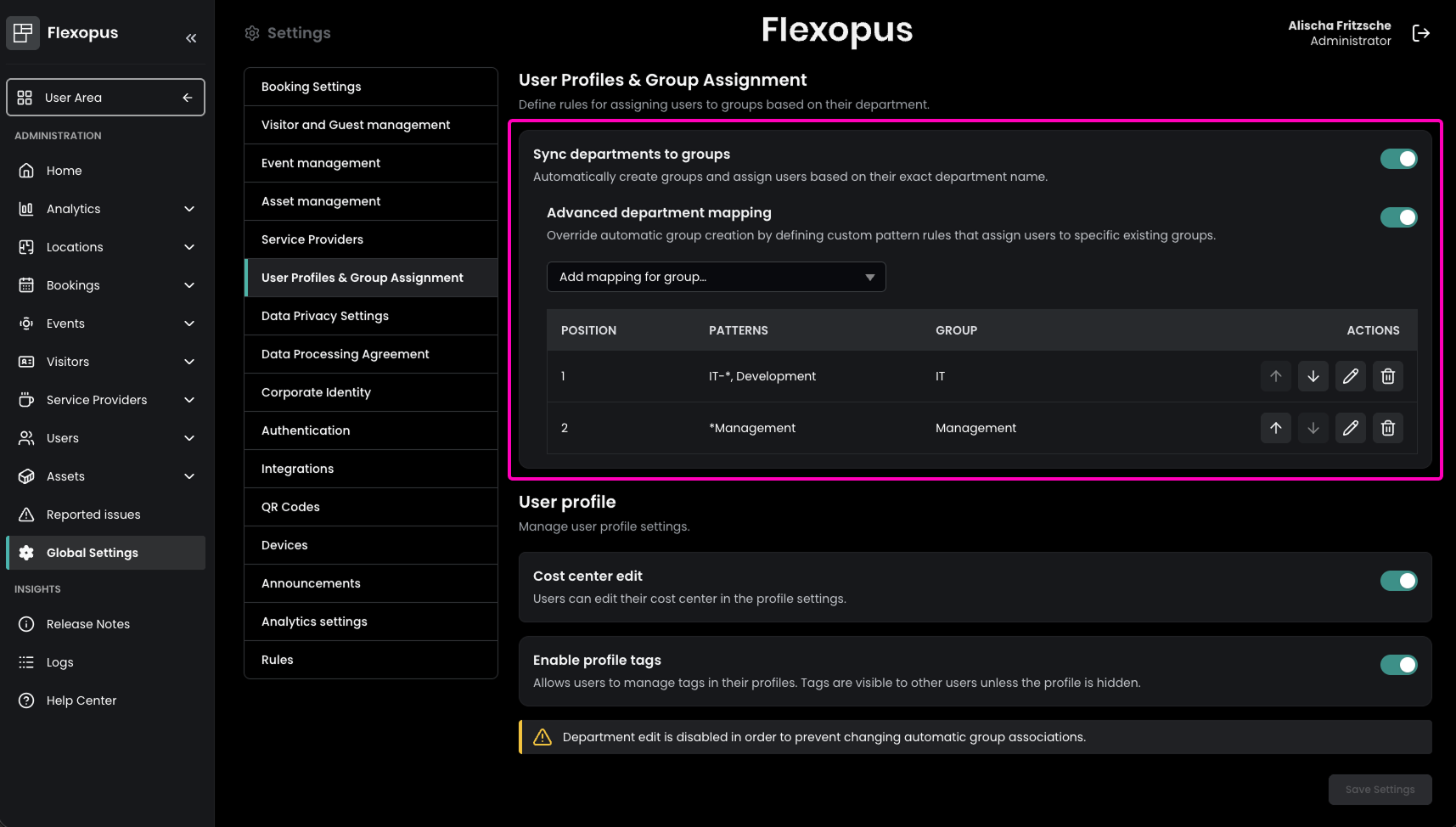
Two new options are available in the Admin Area under Global Settings → User Profiles & Group Assignment.
With Sync departments to groups, Flexopus automatically creates a group for every department available in the user list and assigns users to the corresponding group. If a user's department changes, their group assignment is automatically updated as well.
For more advanced requirements, administrators can use Advanced department mapping. This option allows custom rules to be created for assigning users with specific department values to existing Flexopus groups. Wildcards can also be used to create more complex mapping rules.
Group assignments are automatically kept up to date whenever a user's department changes, reducing manual administration and ensuring consistent access permissions.
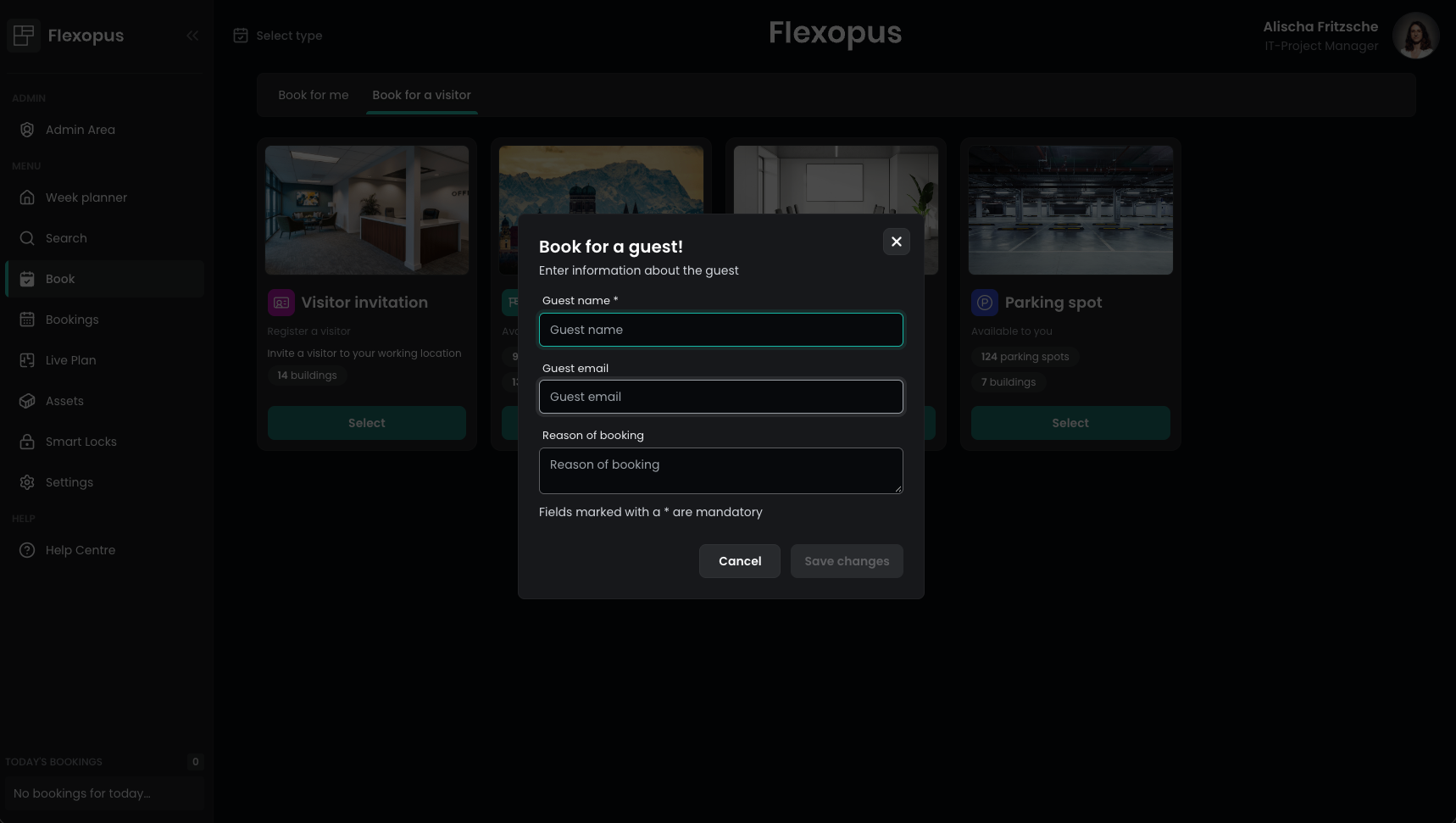
More Flexible Guest Bookings
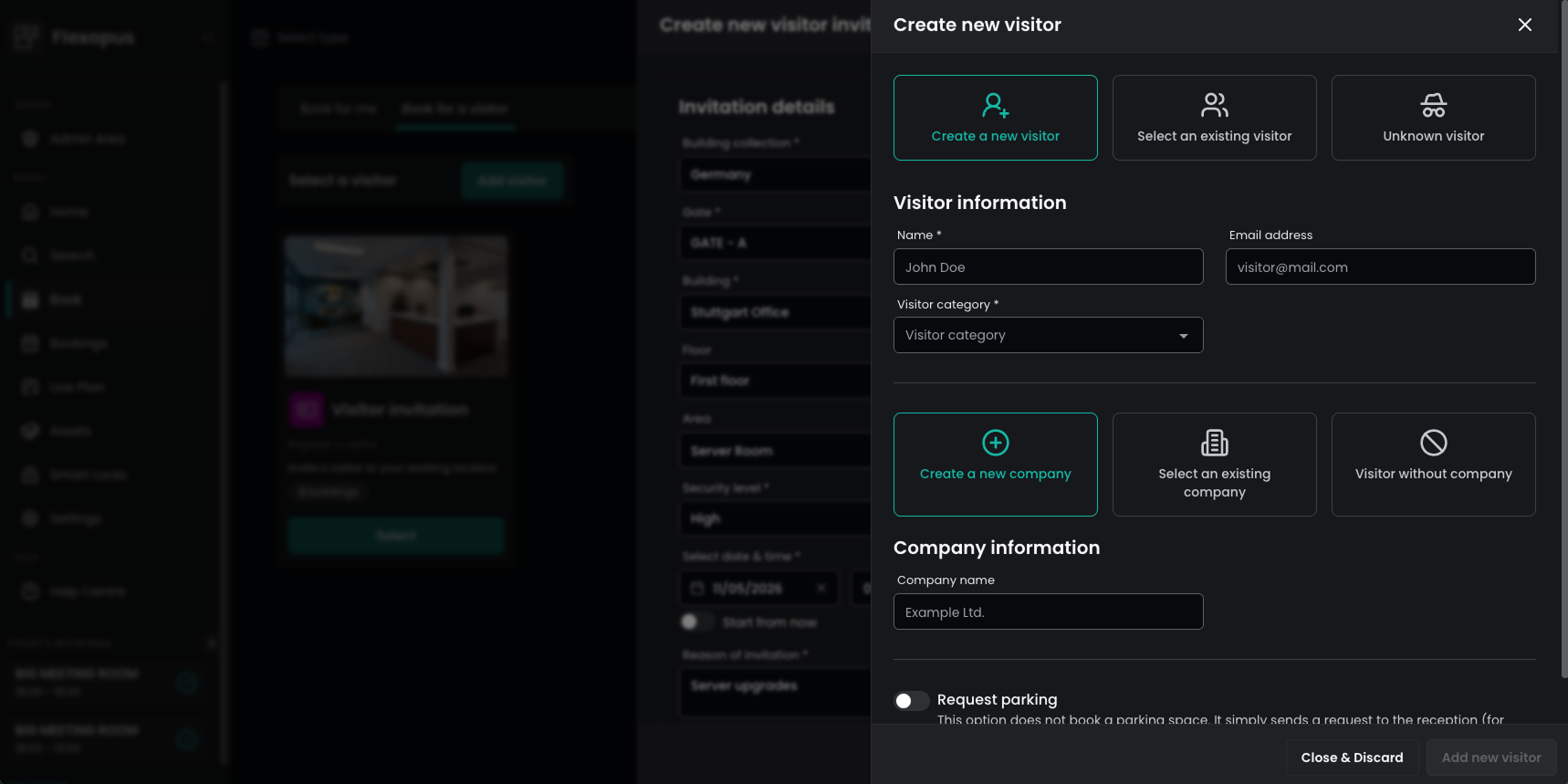
Creating guest bookings is now even more flexible, especially when guests contact details are unavailable or shared.
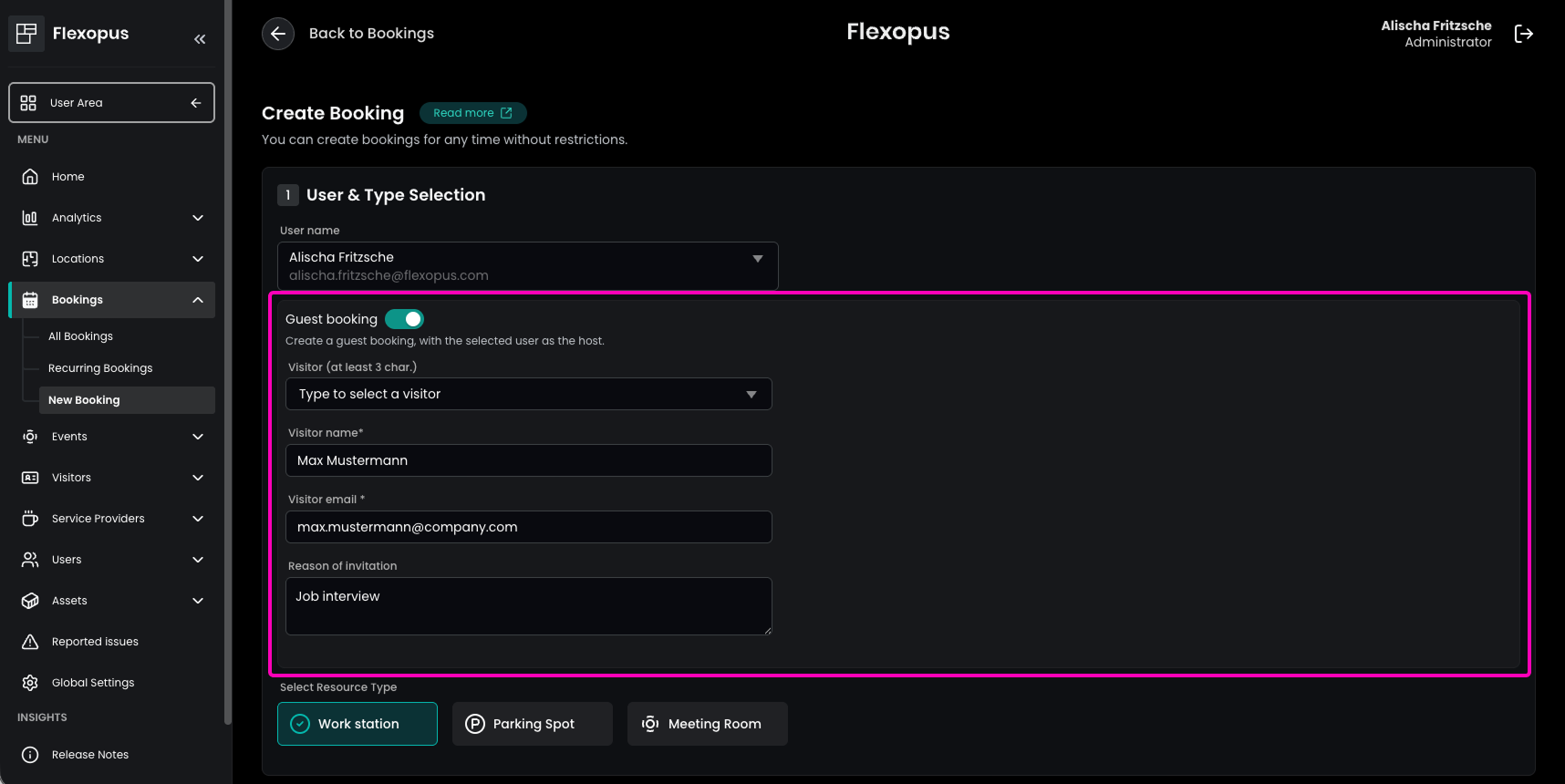
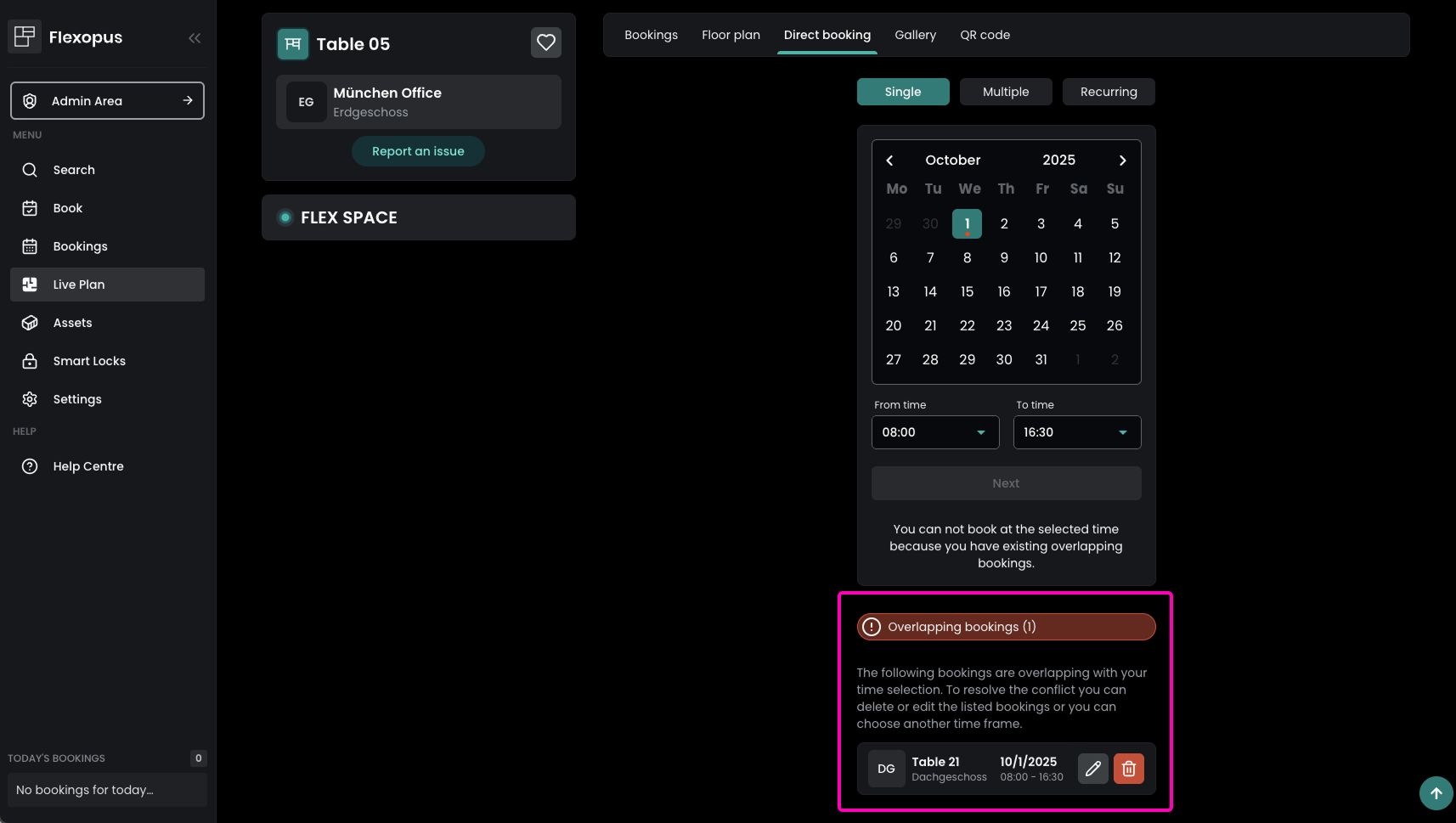
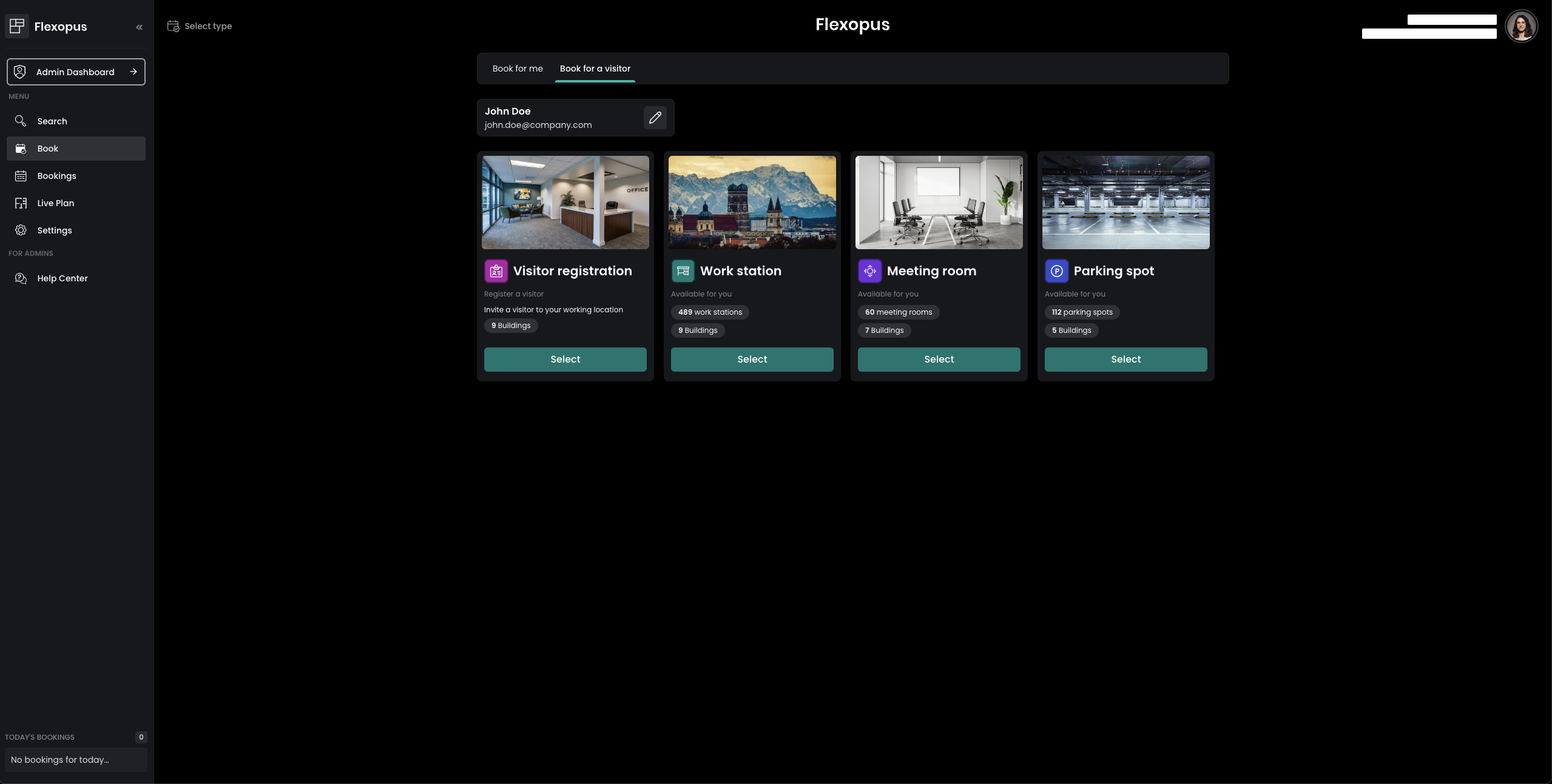
Users can now create guest bookings without entering an email address. This is particularly useful when the guest's contact details are not known in advance, when no email address is available, or when bookings are coordinated centrally by another contact person.
Additionally, multiple different guests can now be registered using the same email address. This provides greater flexibility when several guests share a central contact address or when invitations are coordinated through one contact person.
User-Focused Meeting Room Board
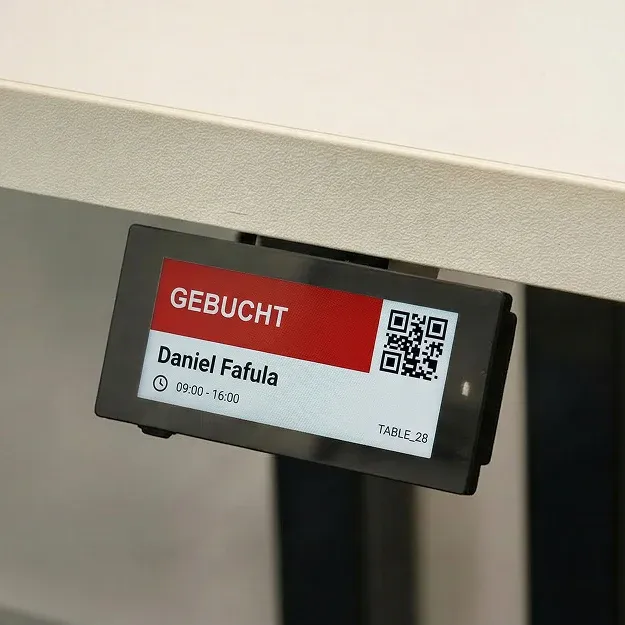
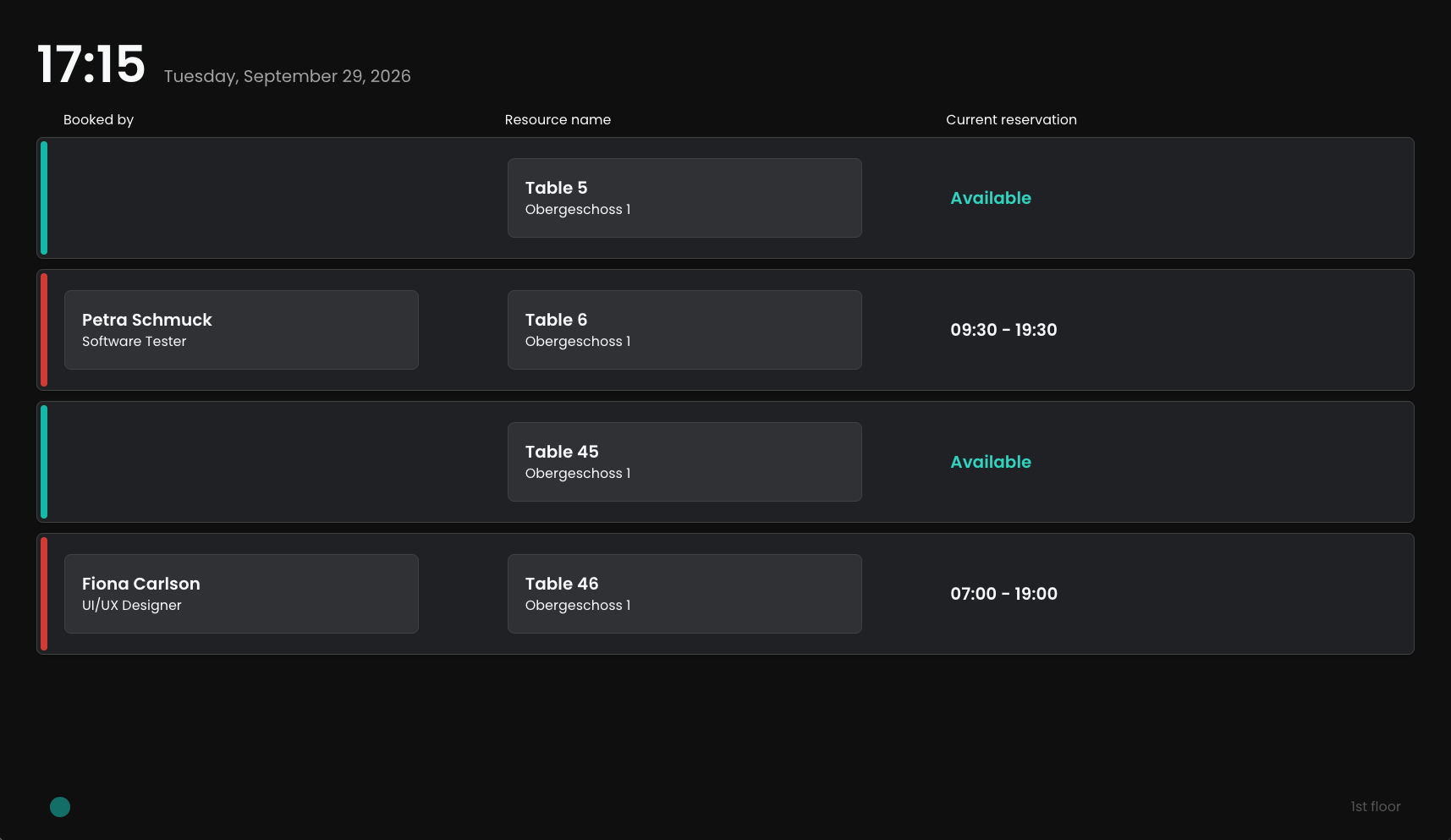
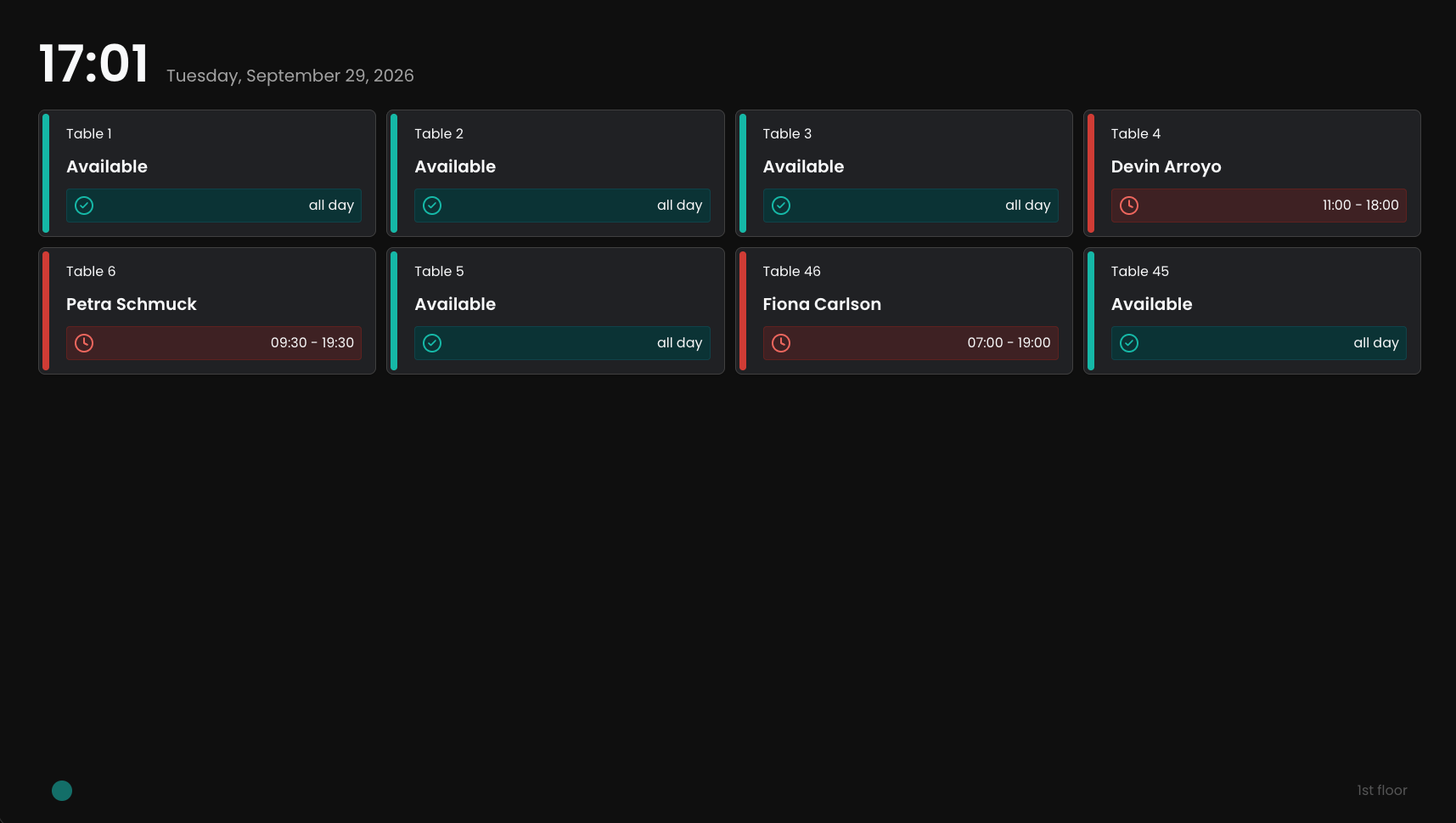
Meeting Room Boards are becoming even more flexible with a new user-focused display option.
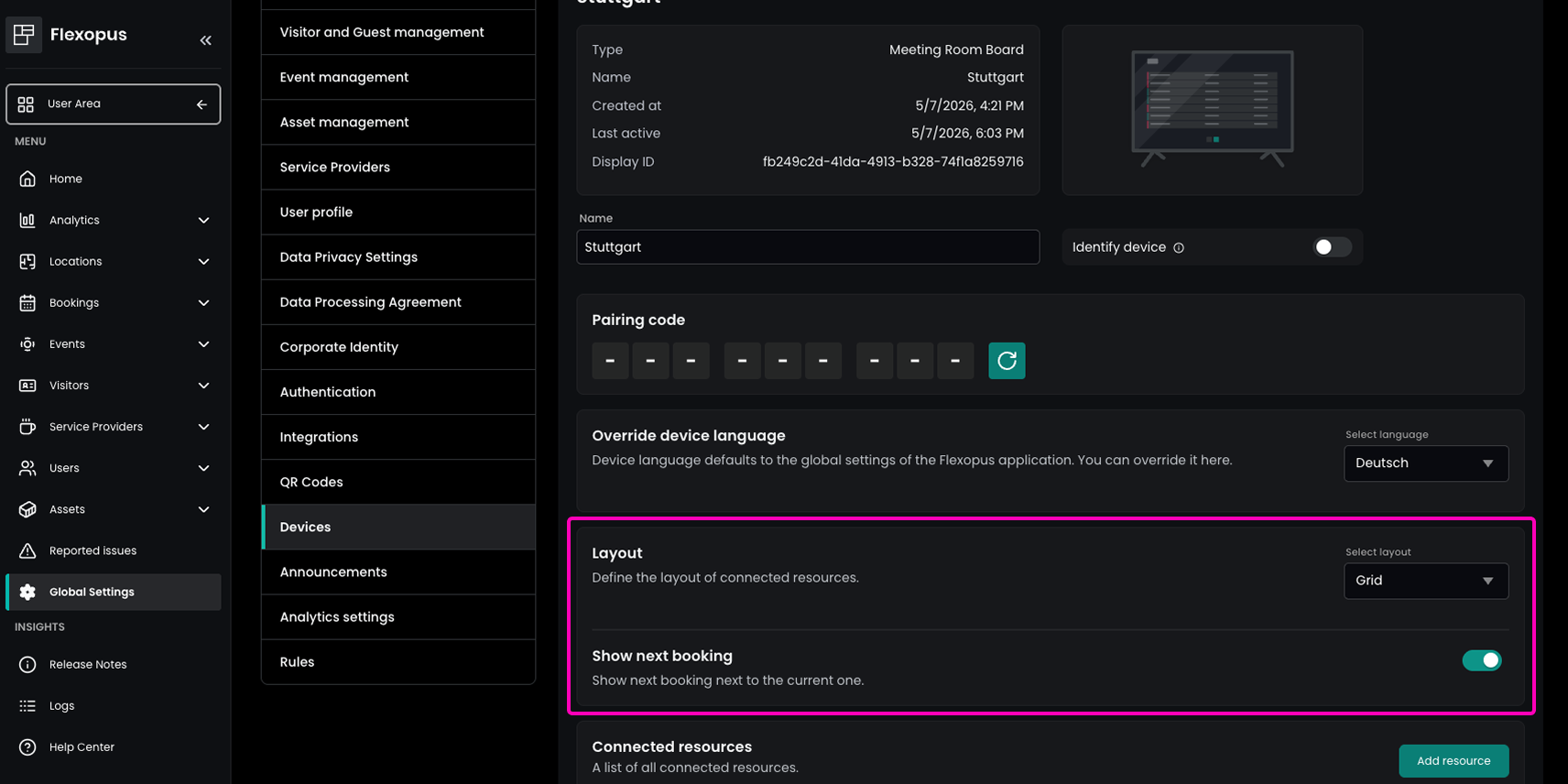
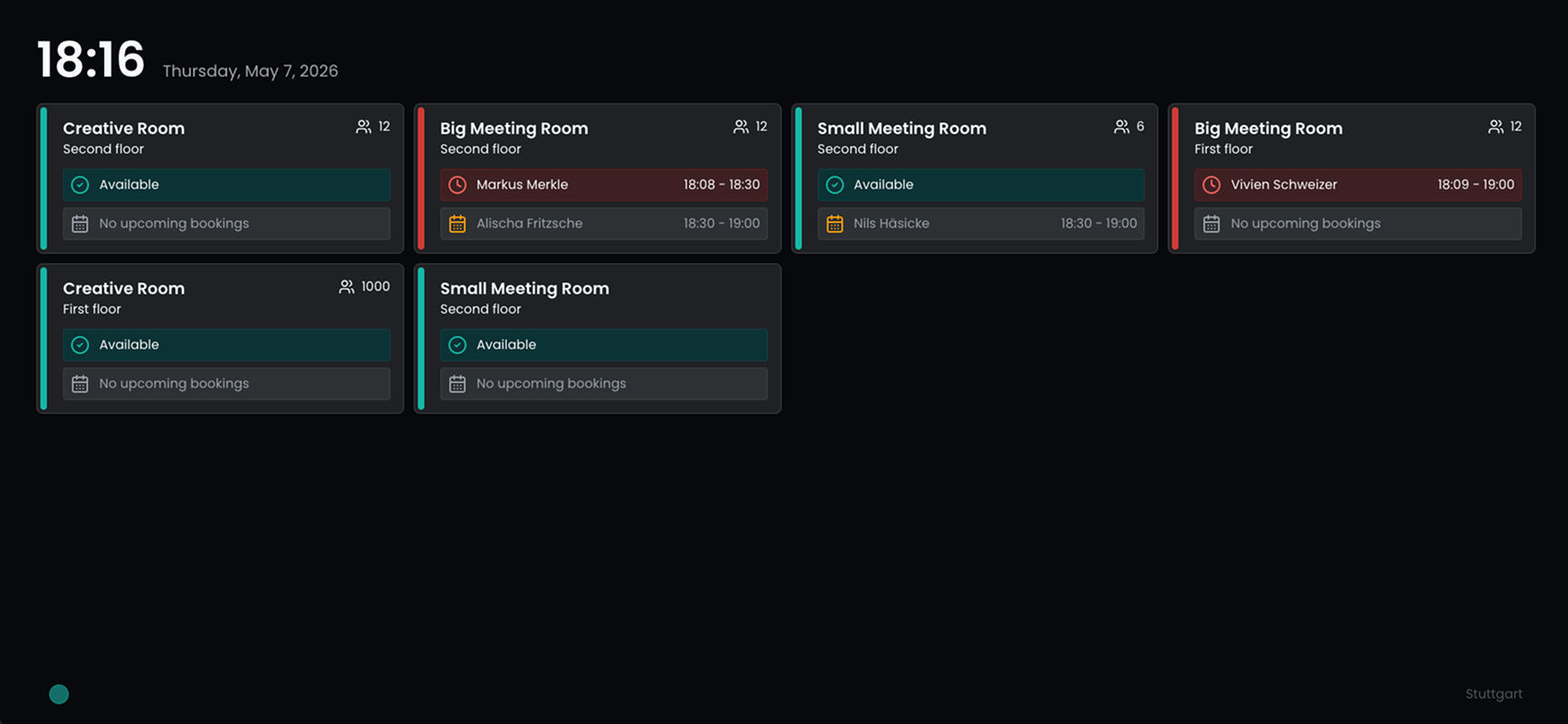
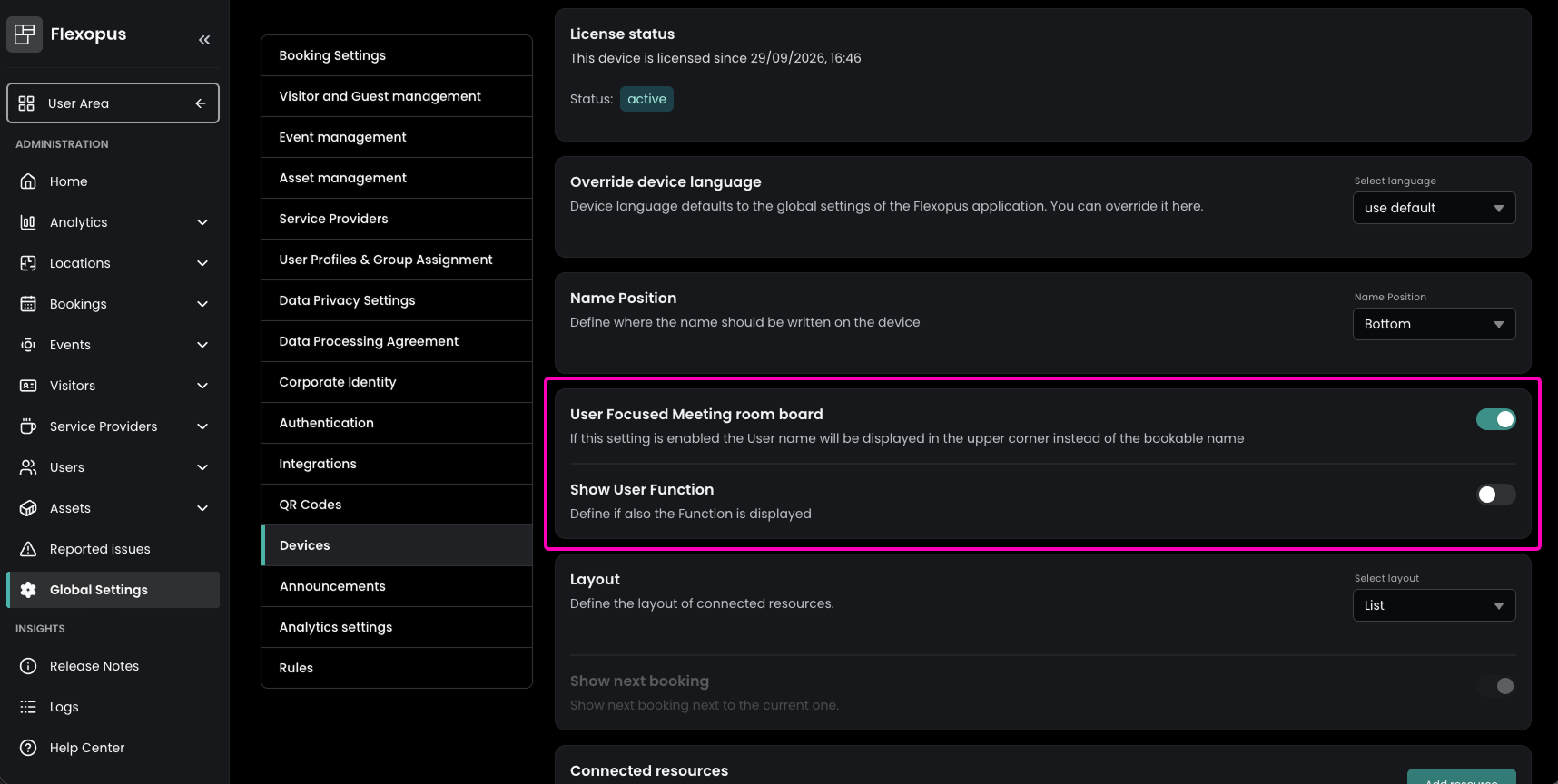
Instead of focusing on meeting room resources, this new layout puts the users behind the bookings at the center of the display. Administrators can optionally show the user's function as additional information.
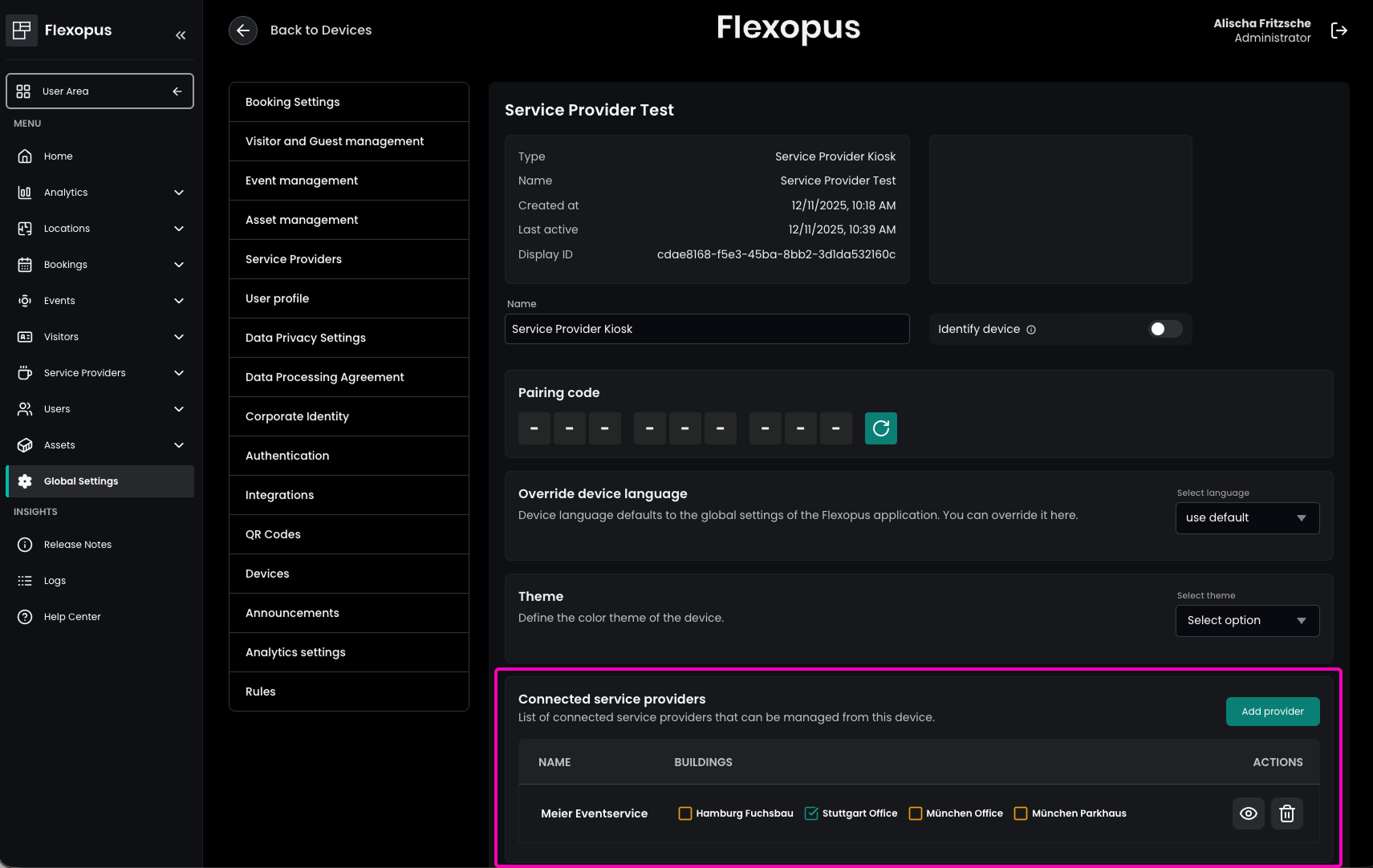
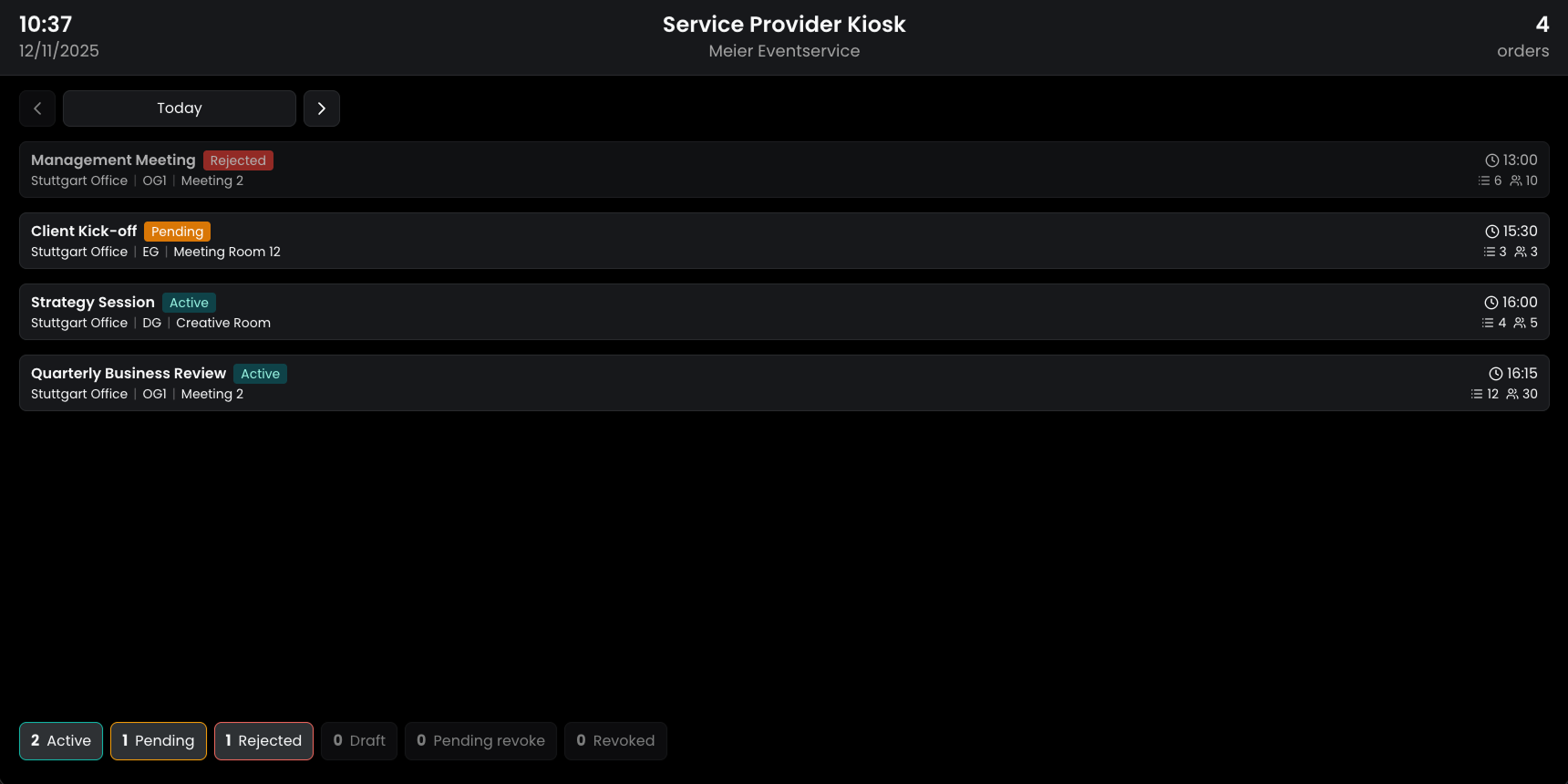
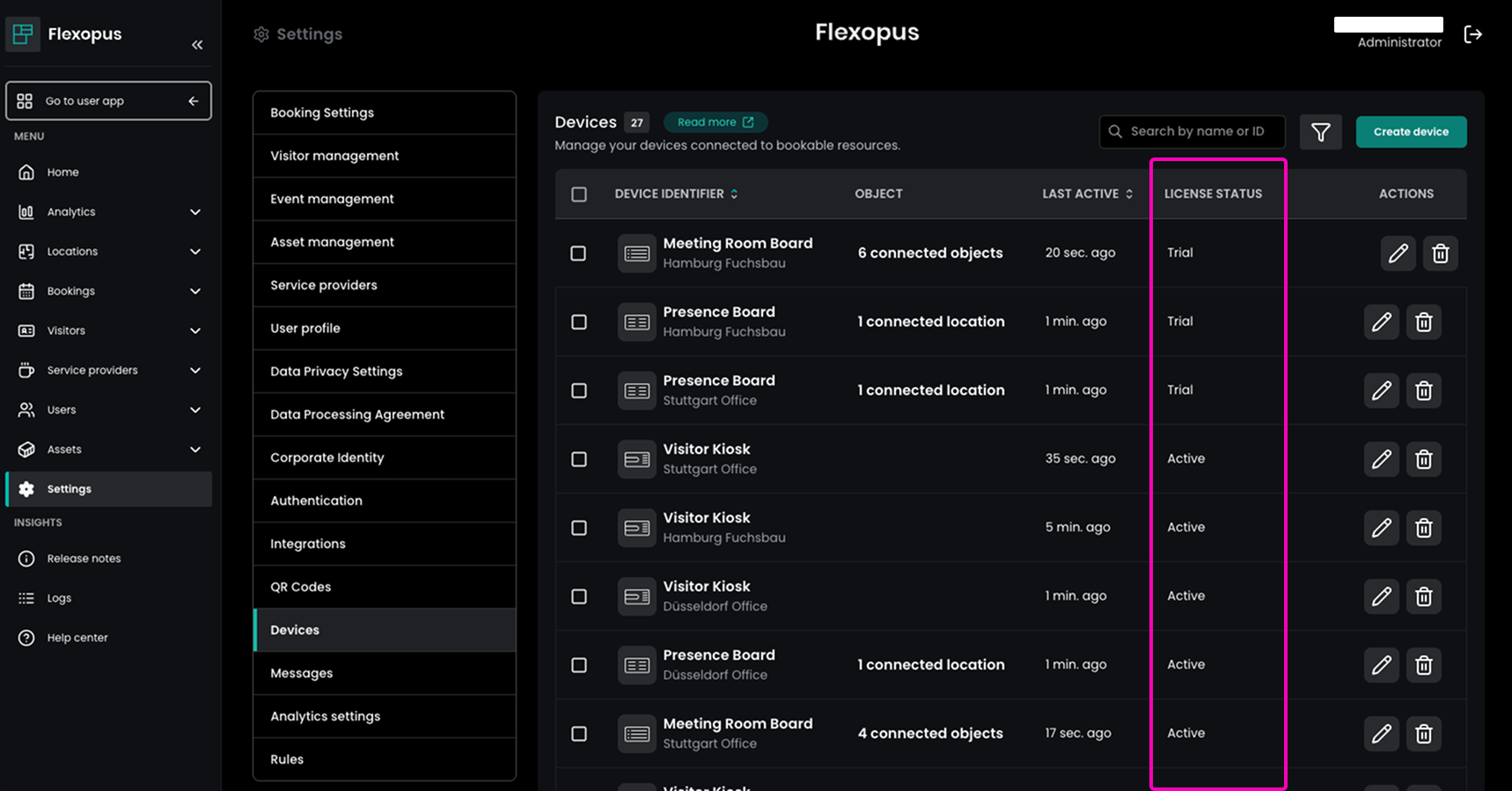
To activate the new view, navigate to Admin Area → Global Settings → Devices and create a new Meeting Room Board or edit an existing one. In the device settings, enable User focused meeting room board and configure whether the user's function should also be displayed.
This provides organizations with greater flexibility when configuring Meeting Room Boards and makes it easier for employees to identify where colleagues and meetings are located.
Directional Icons for Meeting Room Boards
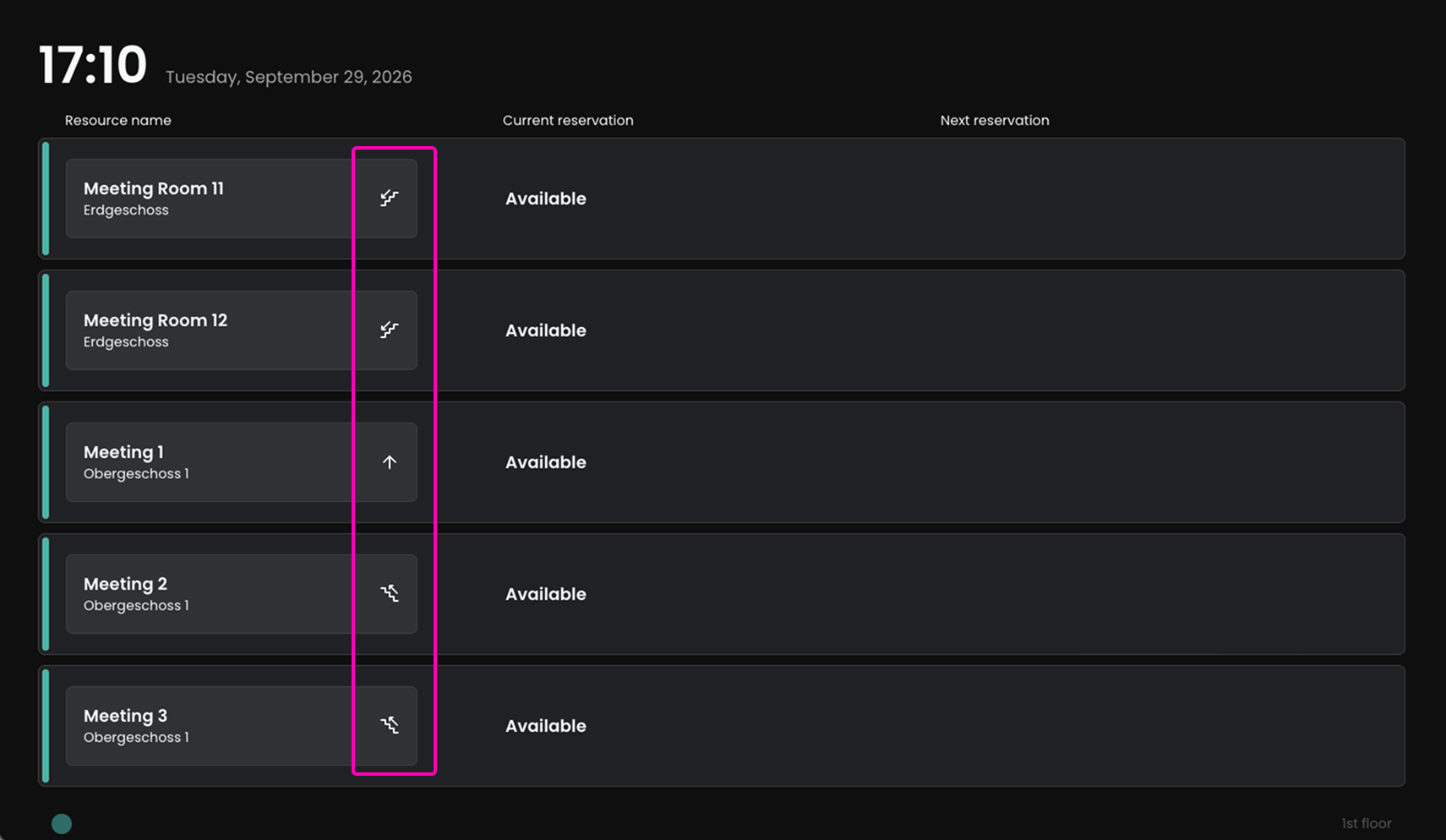
Finding the right meeting room is now even easier thanks to new individual directional icons for Meeting Room Boards.
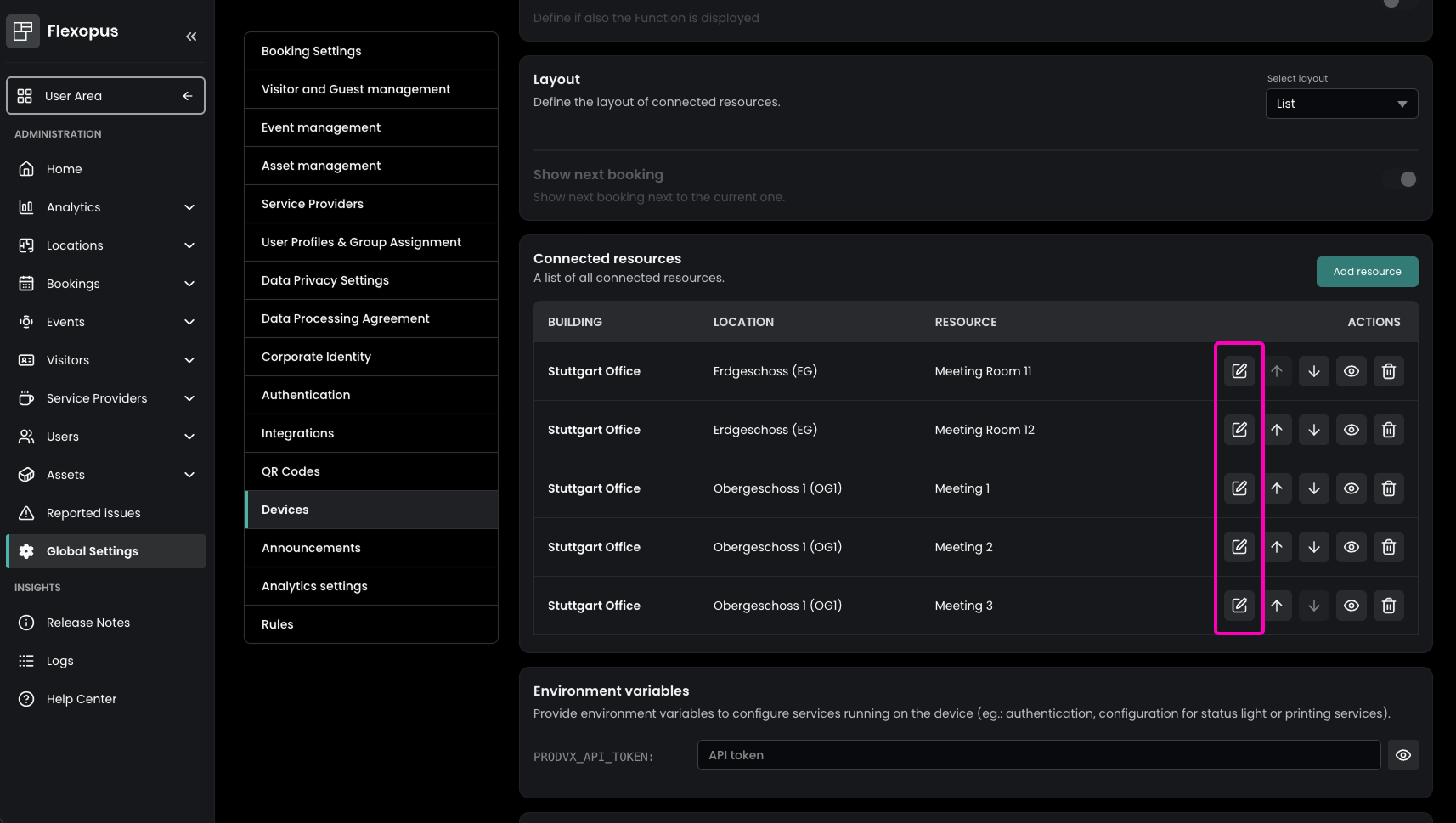
Administrators can configure a different directional icon for each resource connected to a Meeting Room Board. This is especially useful for displays showing multiple meeting rooms located in different directions.
To configure the icons, navigate to Admin Area → Global Settings → Devices, edit the desired Meeting Room Board, and under Connected resources, select the appropriate directional icon for each resource.
Edit External Events Directly in Flexopus
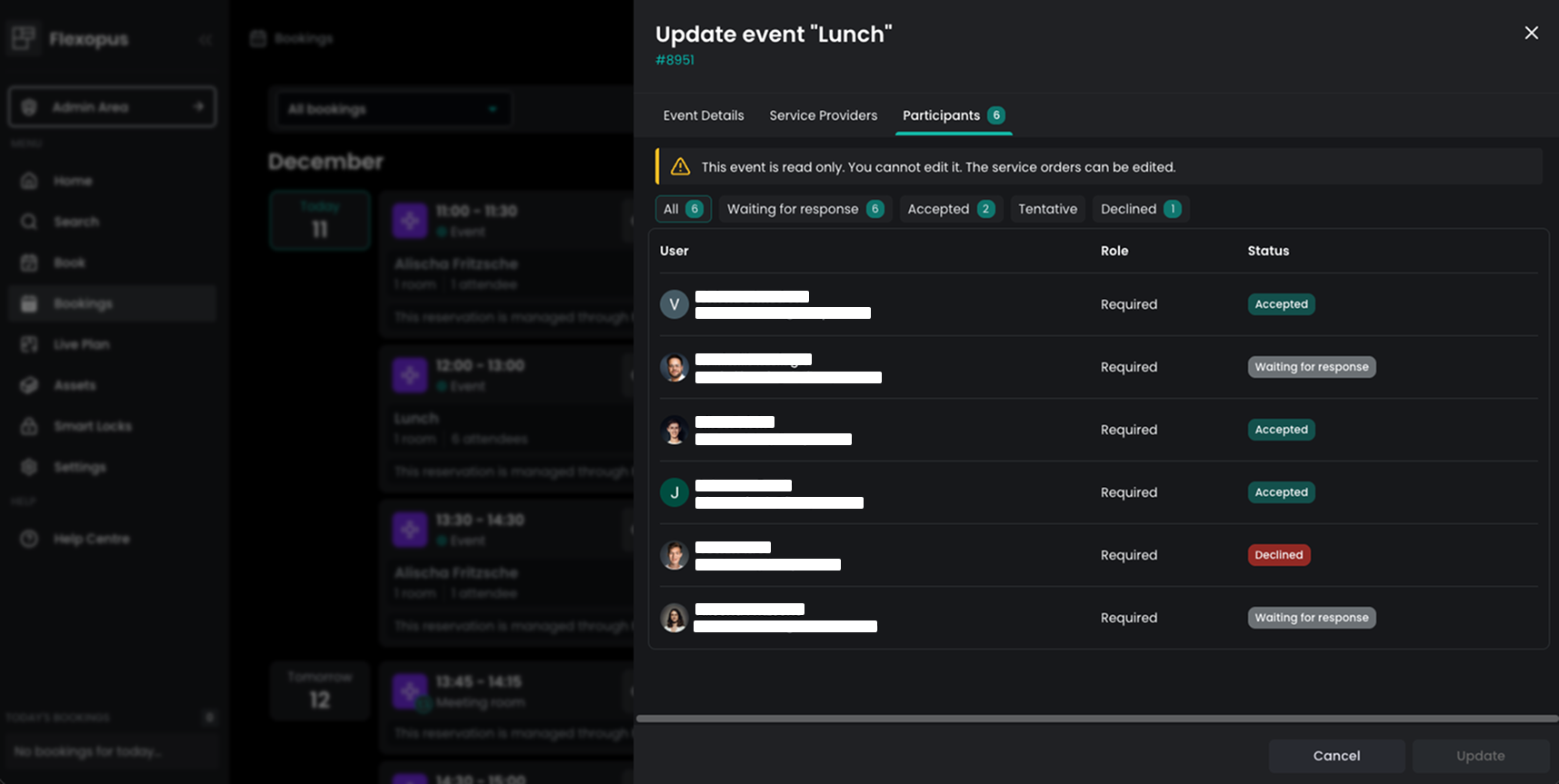
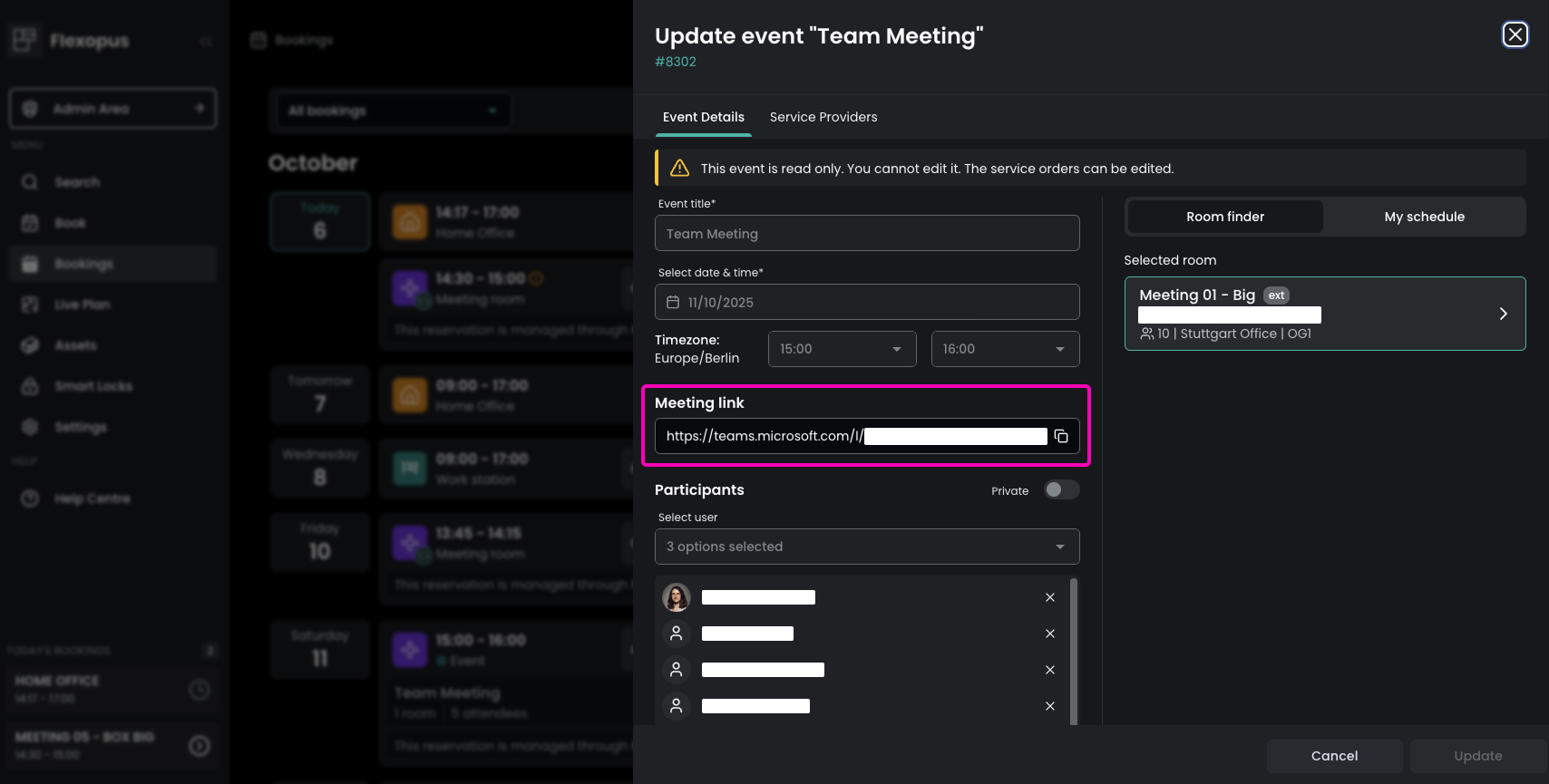
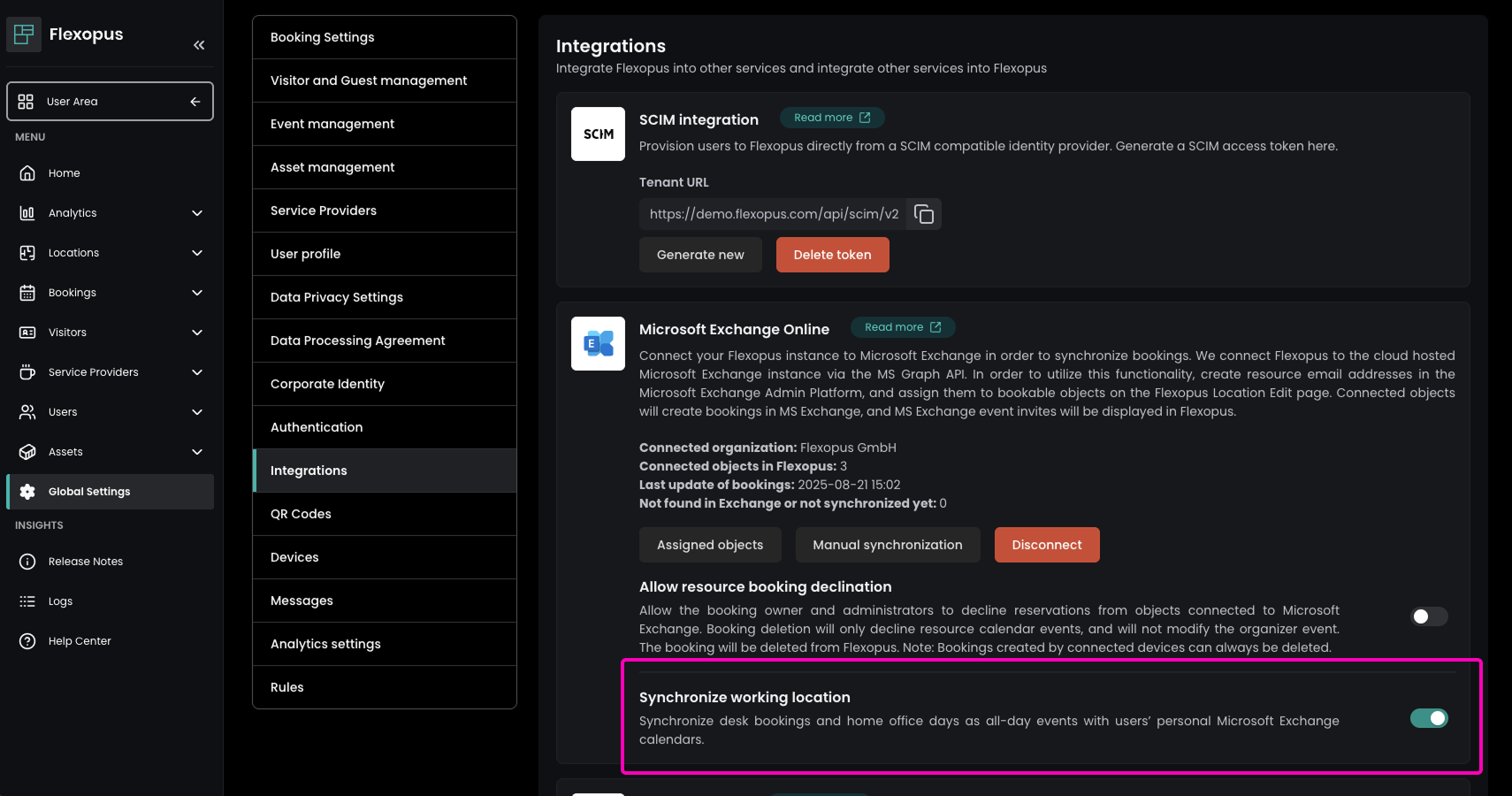
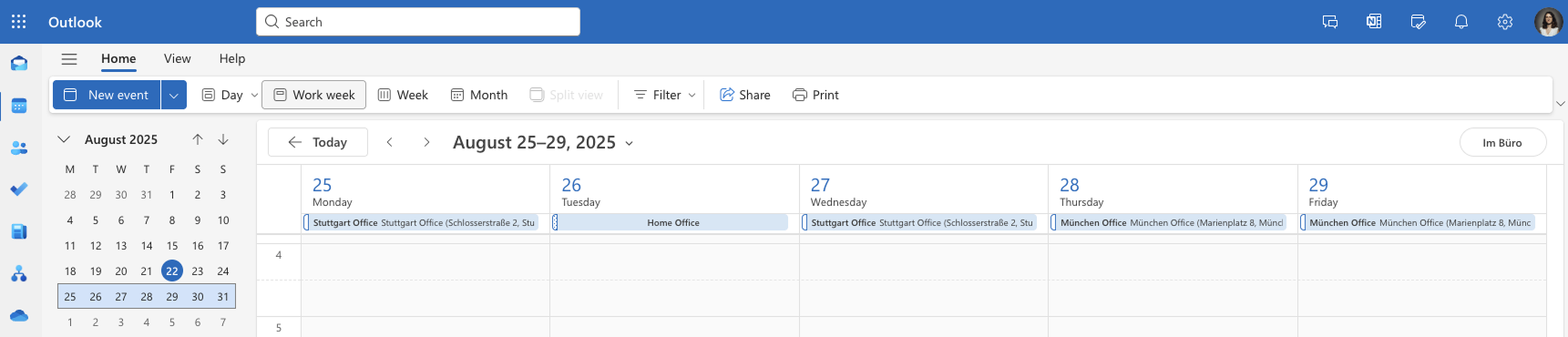
Managing synchronized calendar bookings just became more convenient: external Exchange (Online or On-Premise) and Google Calendar individual events can now be edited directly in Flexopus.
Previously, changes to externally synchronized bookings had to be made in Exchange or Google Calendar. With this update, users can adjust individual events directly in Flexopus without switching between applications.
Any changes made in Flexopus are automatically synchronized with the connected Exchange or Google Calendar, ensuring that booking information remains consistent across both systems.
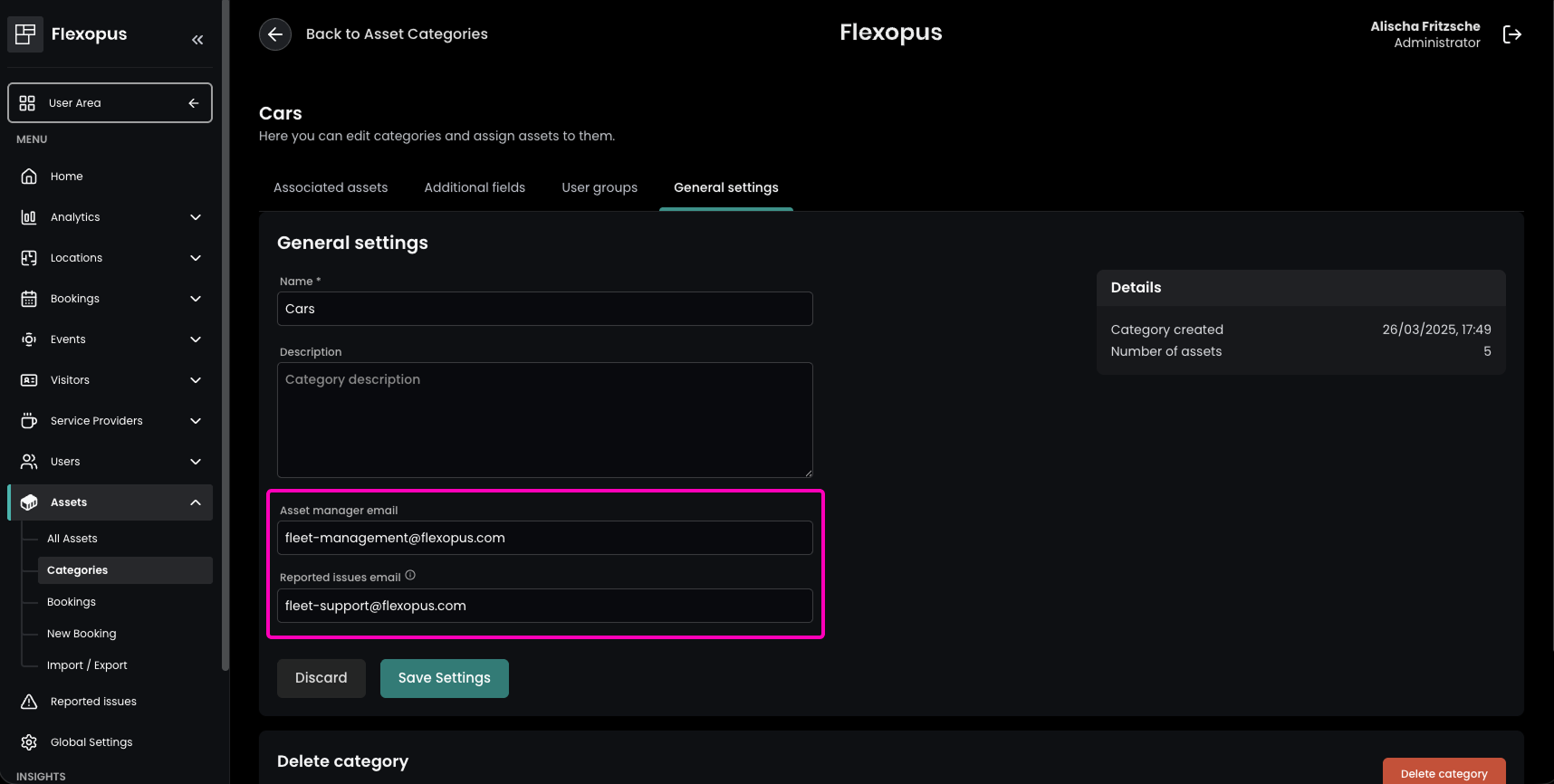
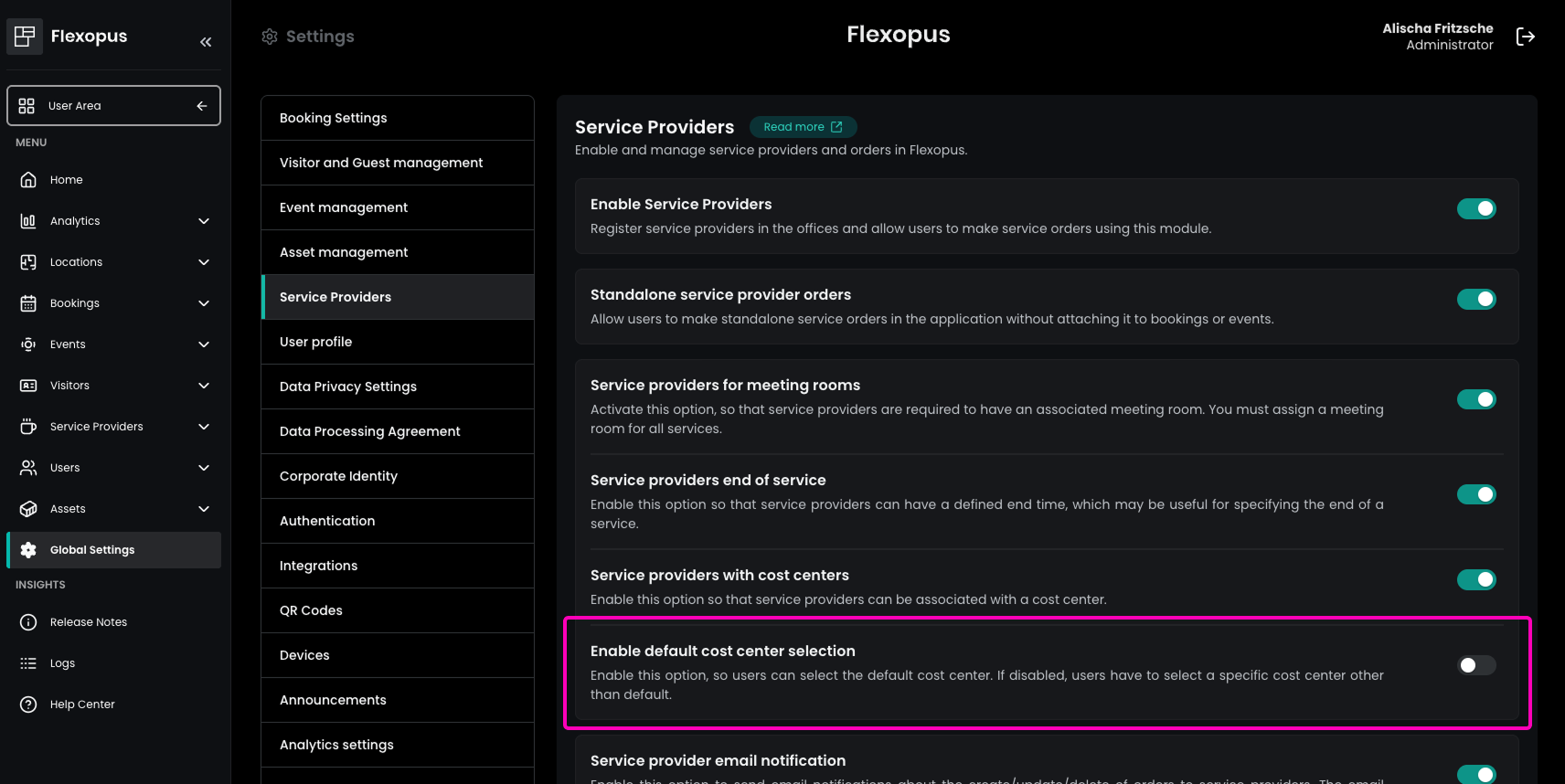
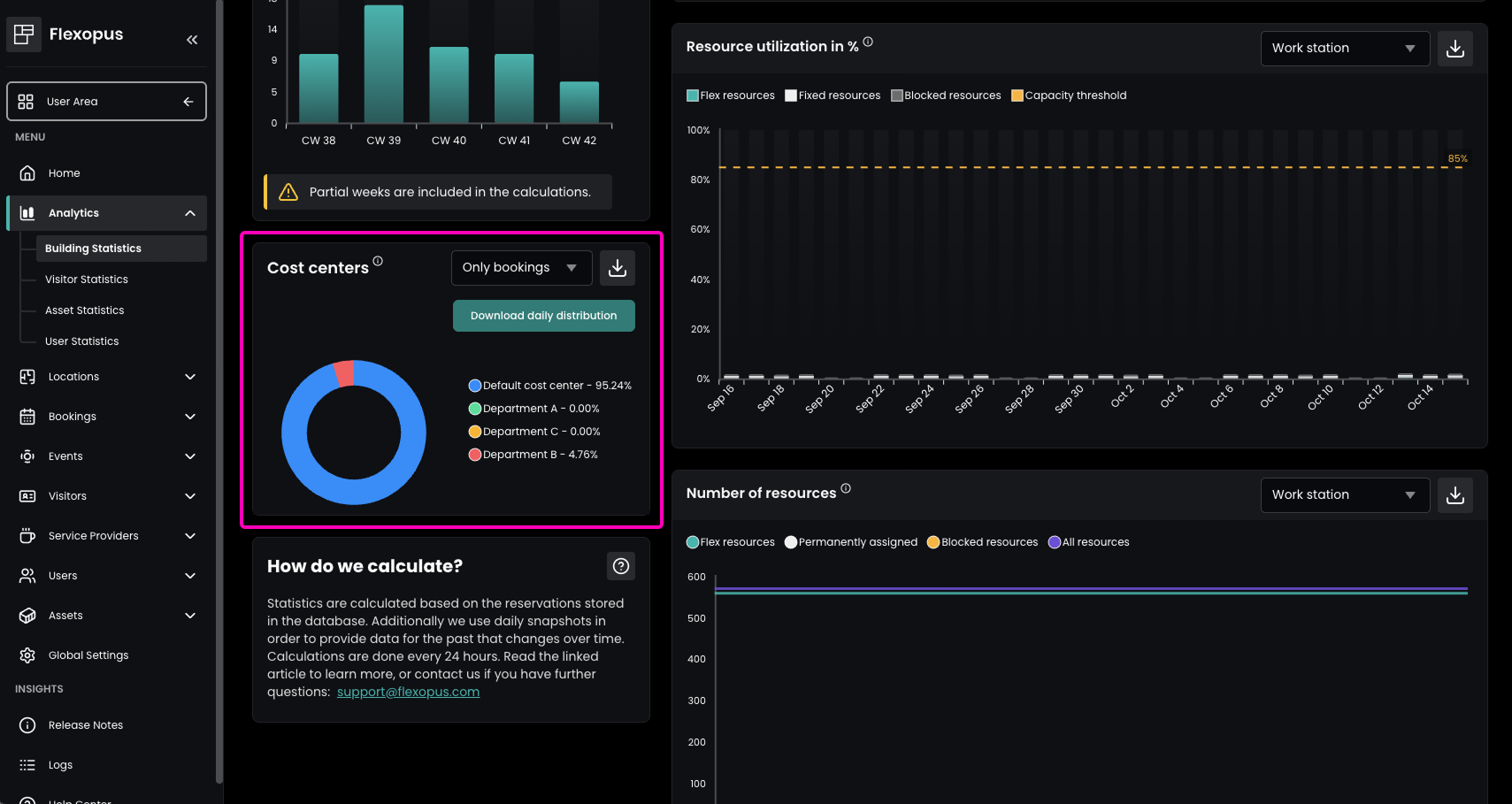
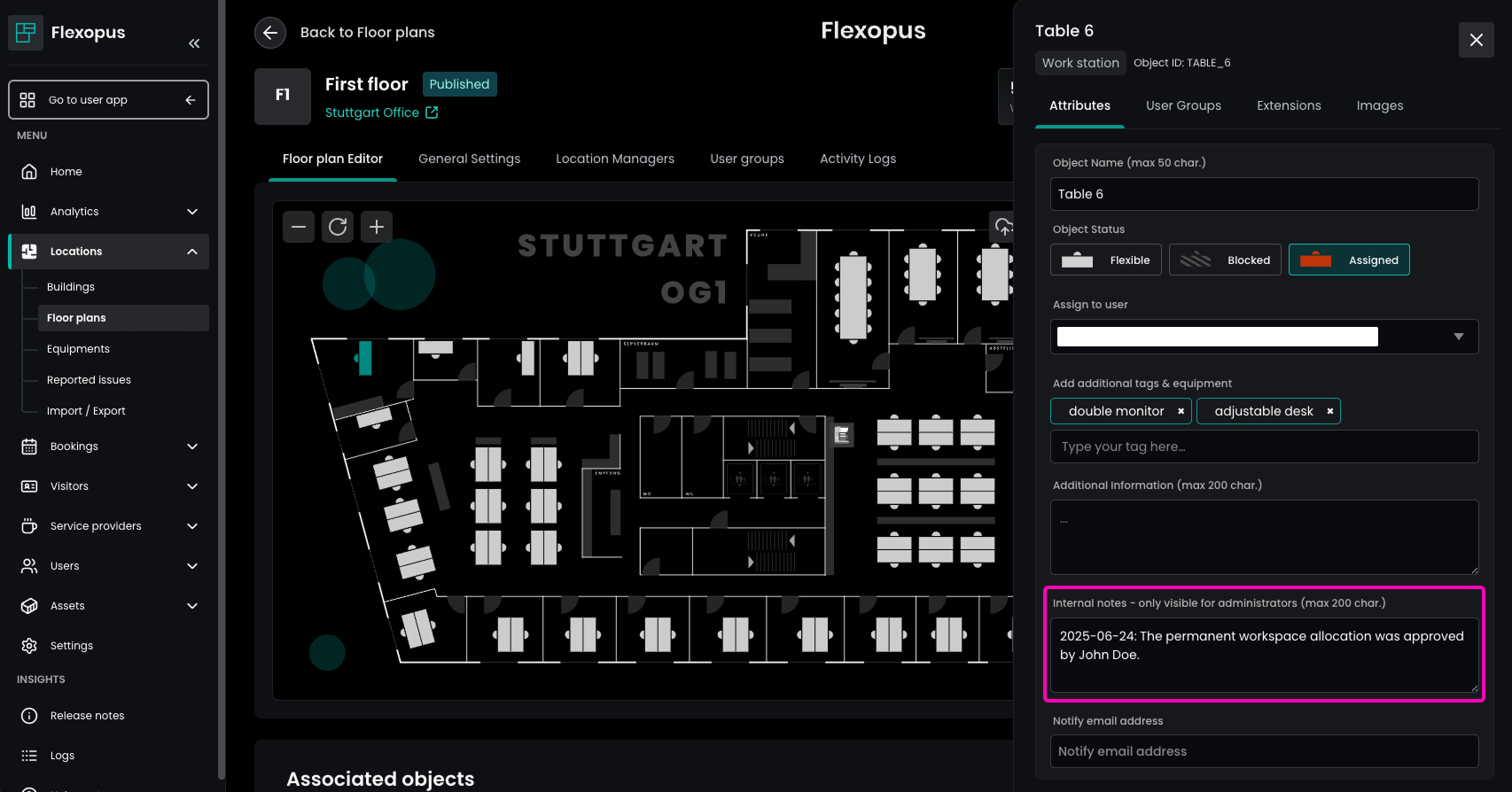
Codes for Cost Centers
Working with internal cost center structures is now cleaner and easier thanks to dedicated cost center codes.
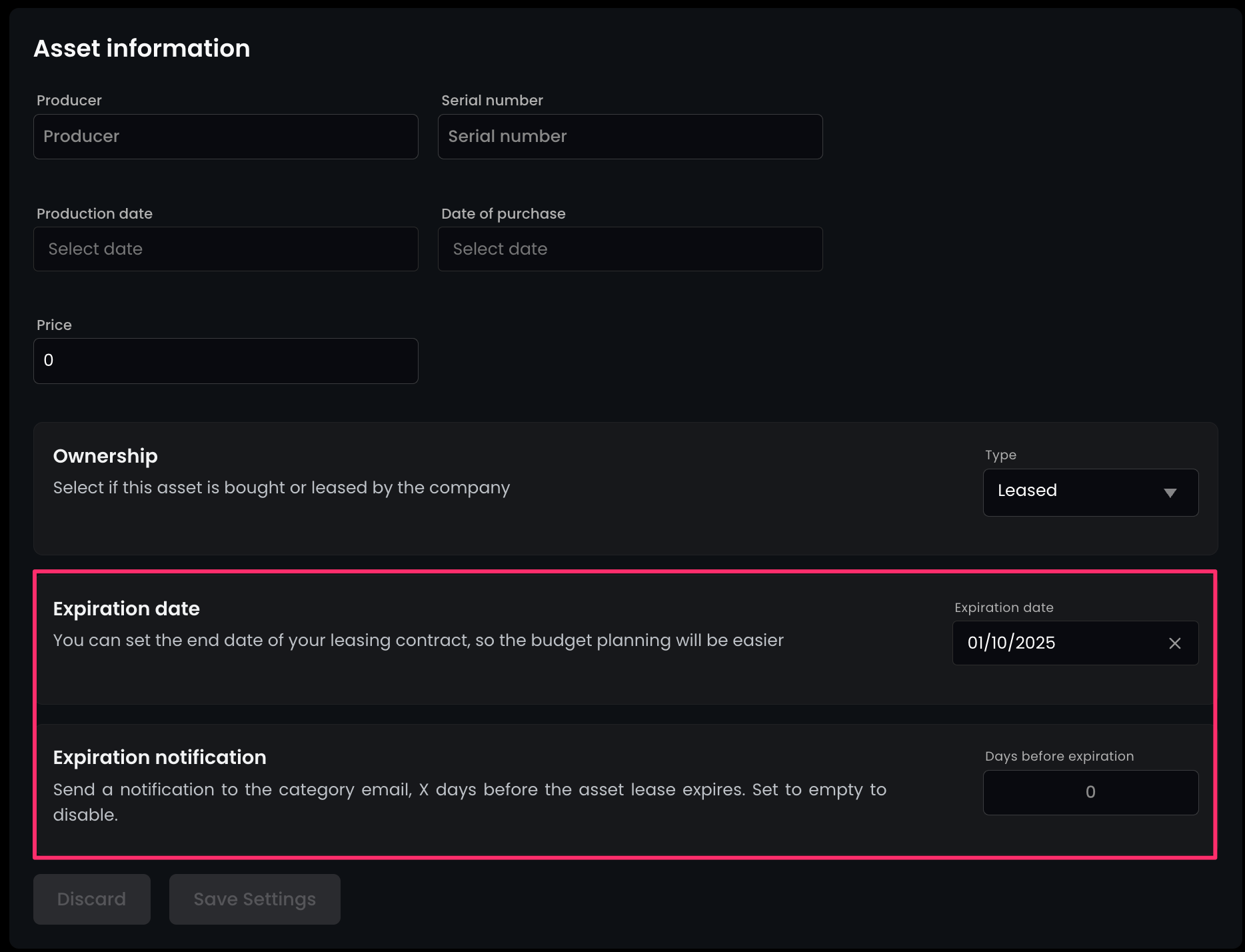
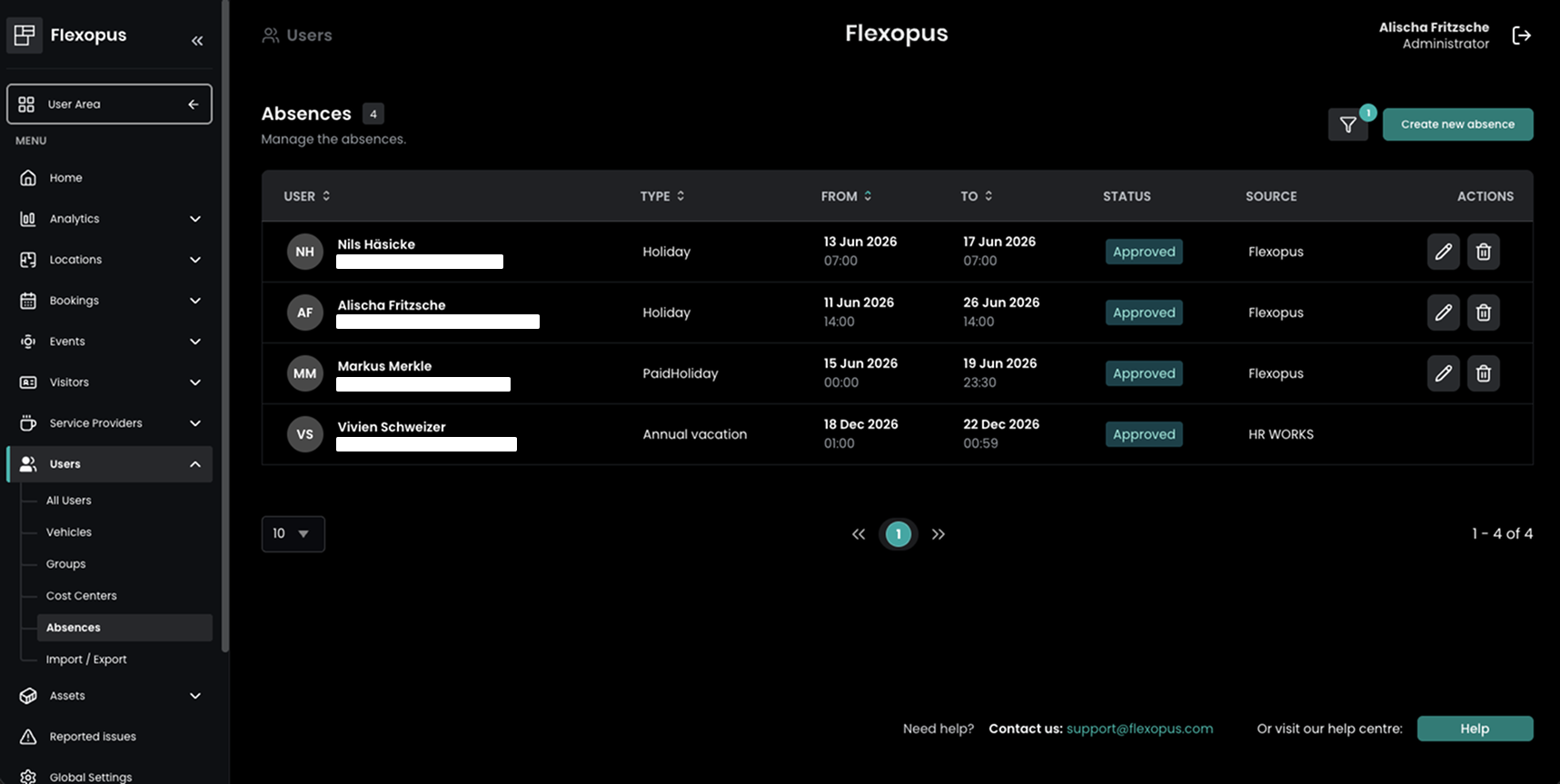
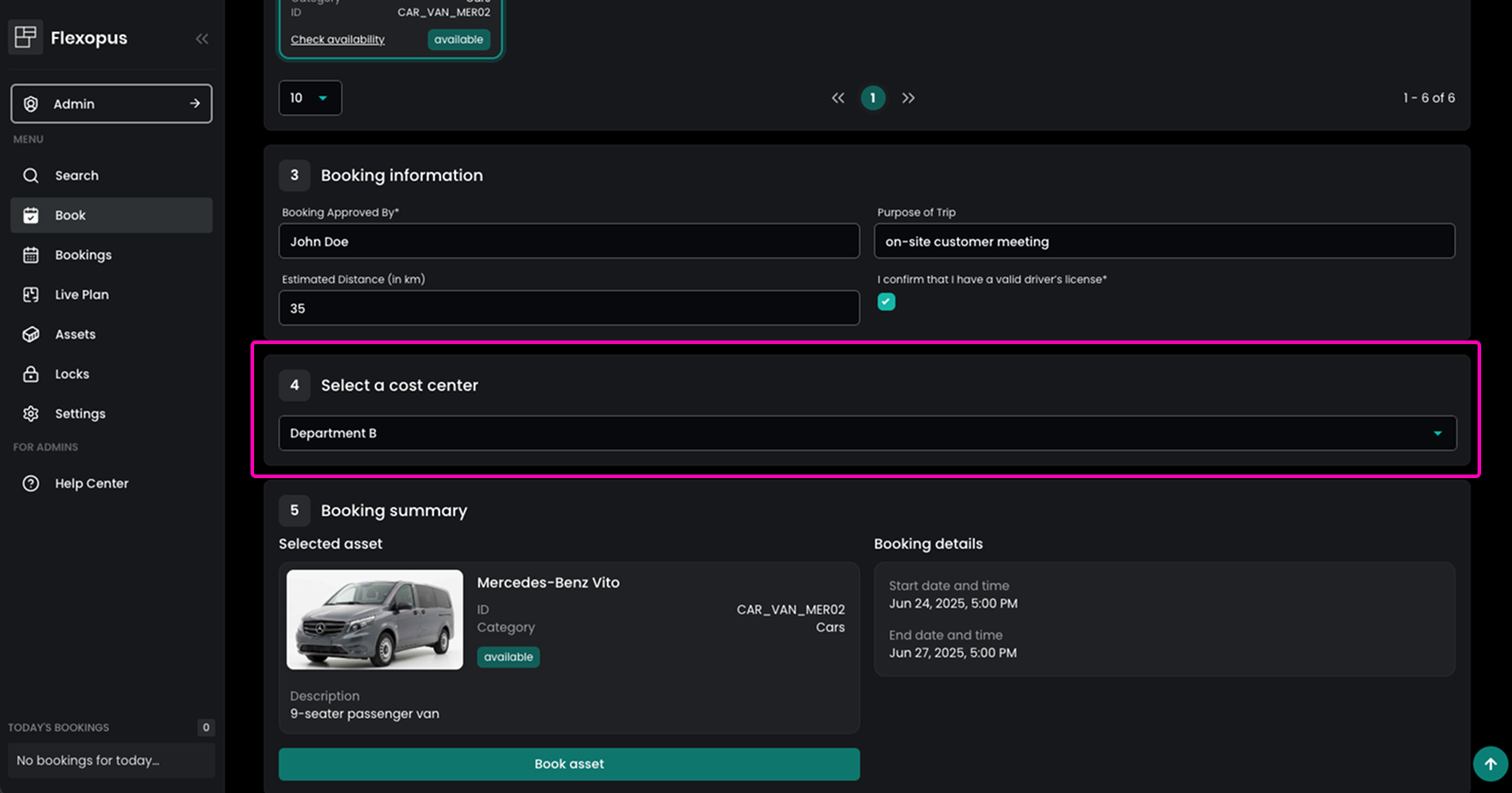
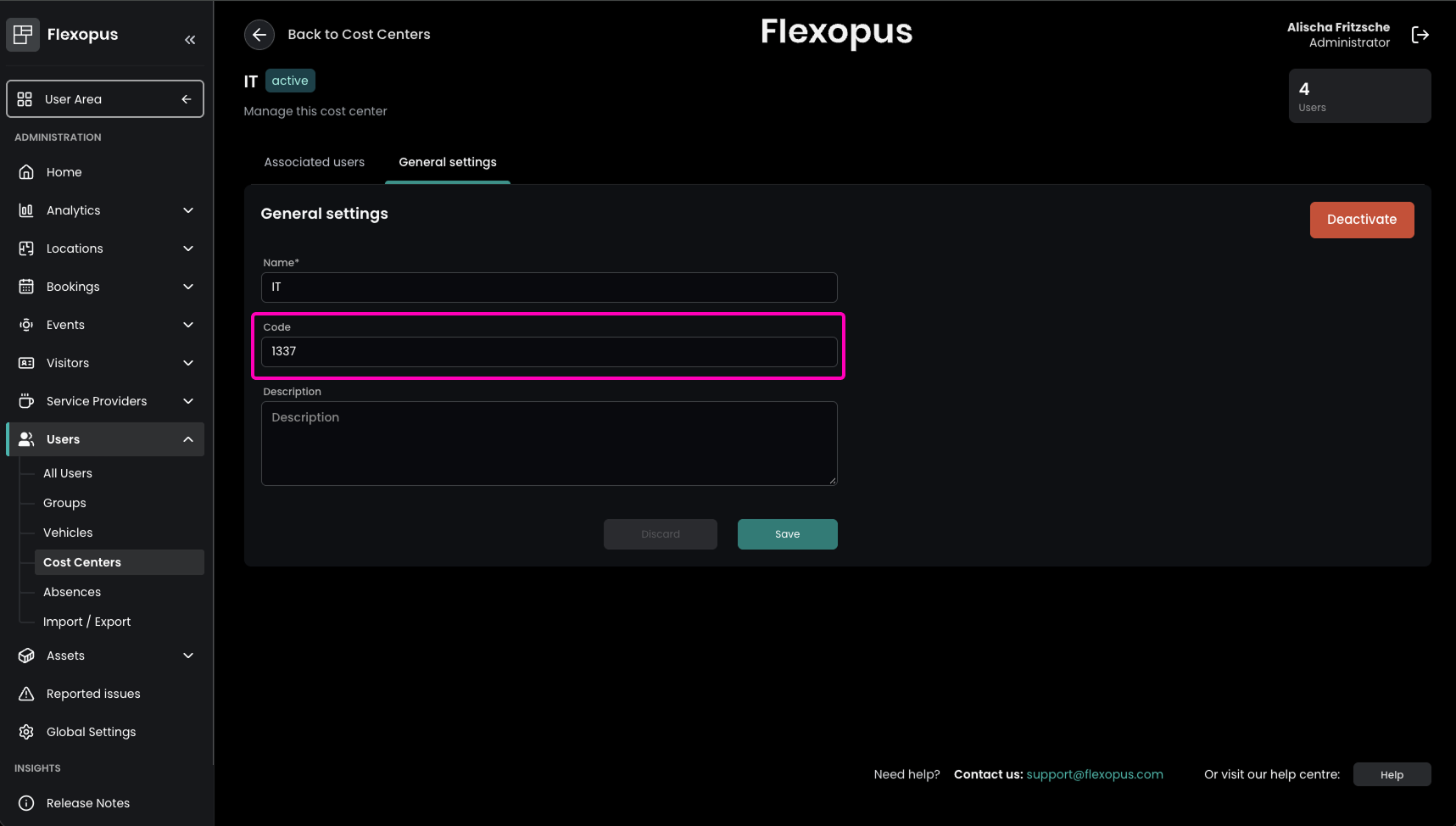
Cost centers can now have an additional code, making it easier to map internal structures and use cost center information for internal billing or reporting processes.
Instead of including long internal identifiers directly in the cost center name, administrators can now store them separately as a dedicated code. This keeps cost center names clear and easy to understand for users while still retaining the required internal reference.
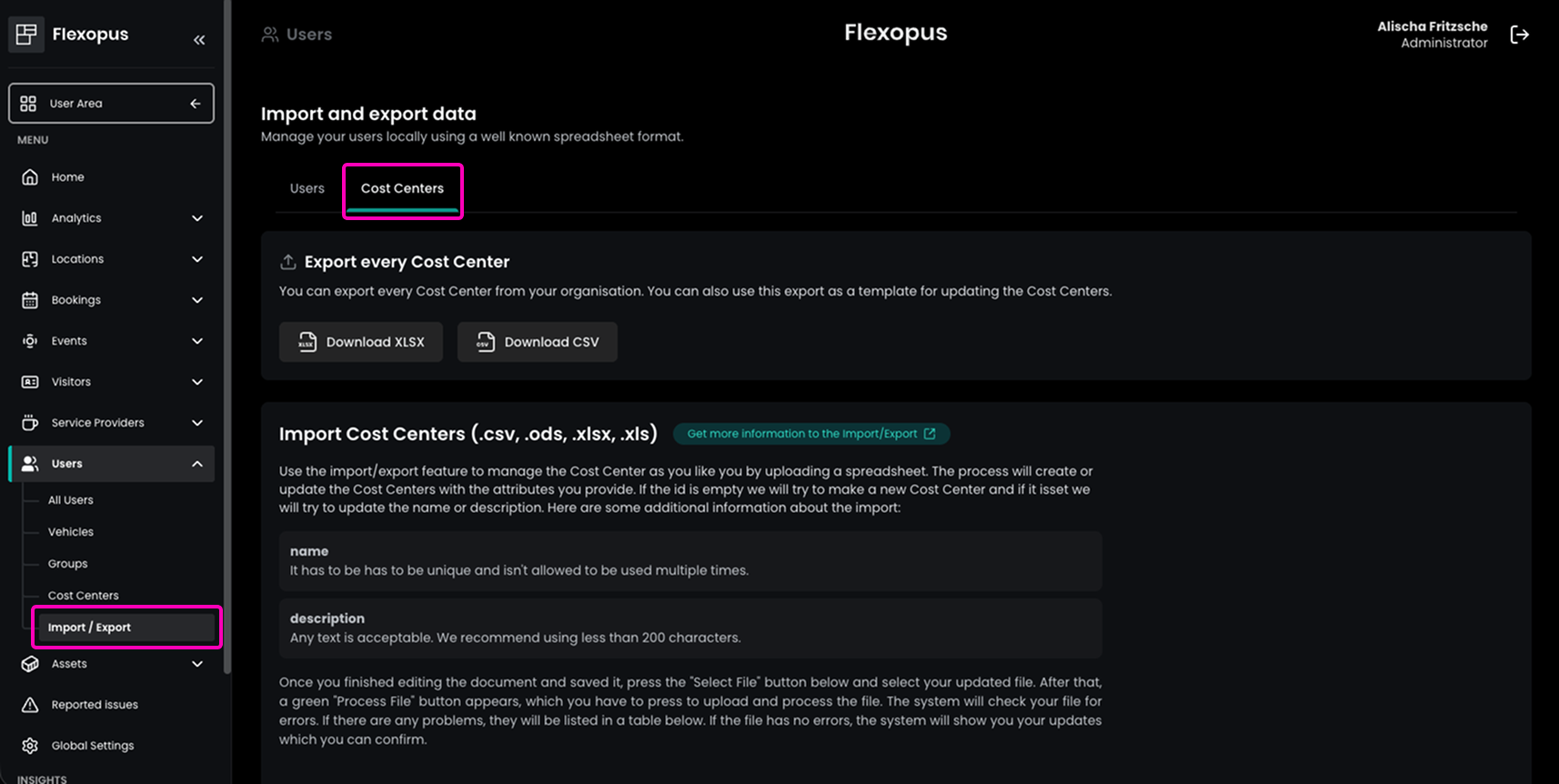
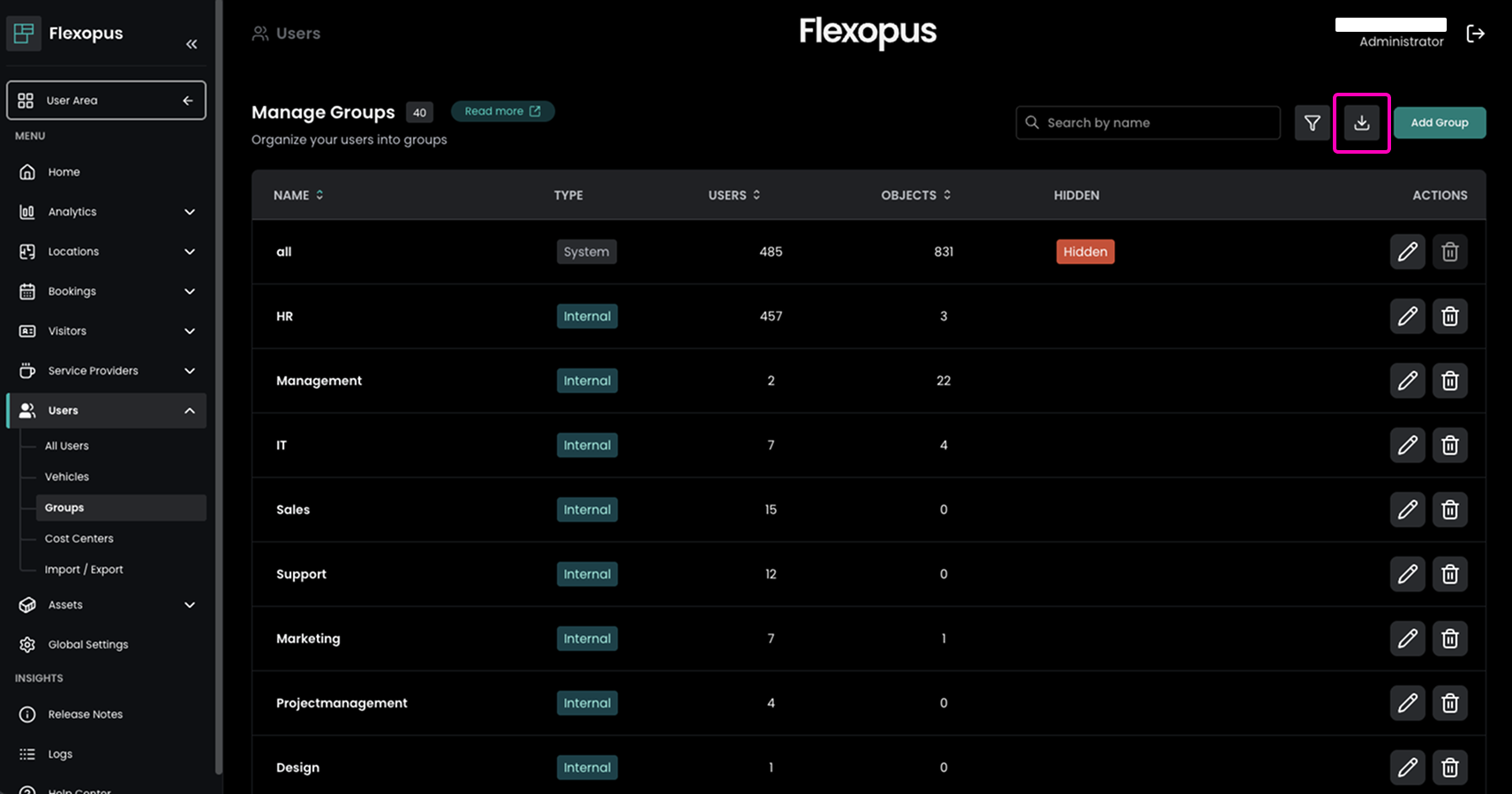
Codes can be configured in the Admin Area under Users → Cost Centers by editing the respective cost center and adding the code under General Settings.
For larger changes, cost center codes can also be updated in bulk under Users → Import / Export → Cost Centers.
Flexopus Visitor
Multi-Day Visitor Invitations
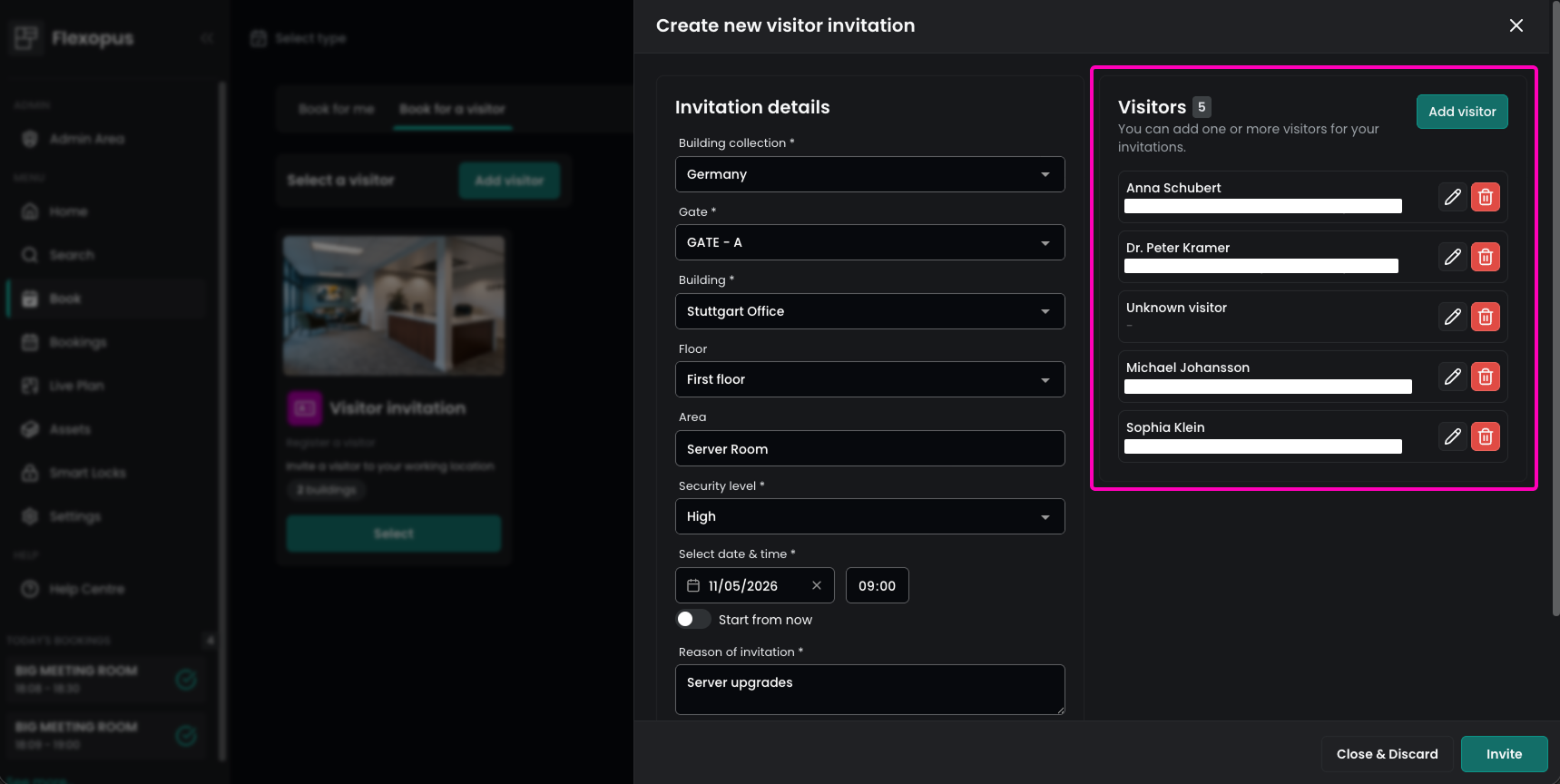
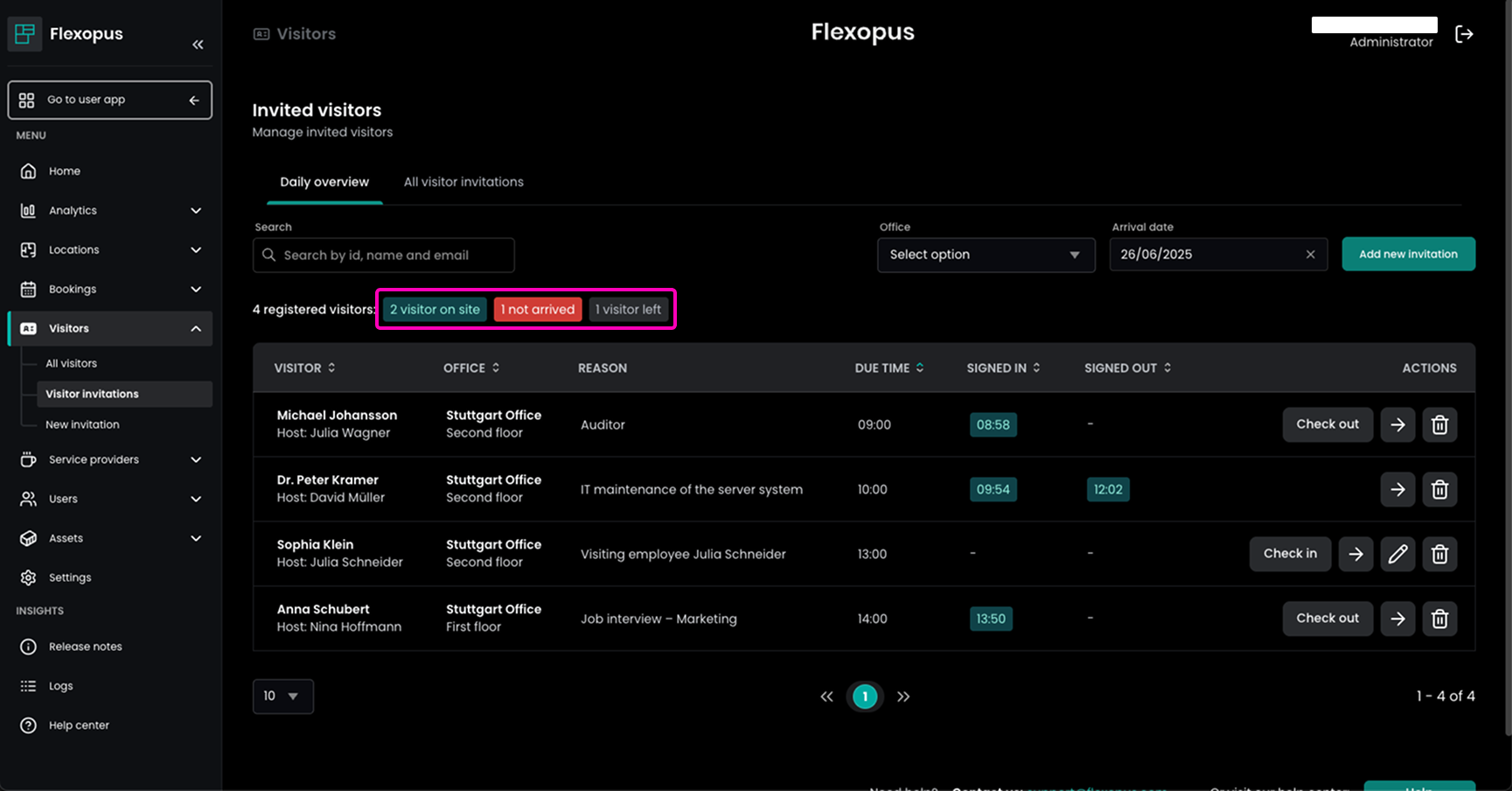
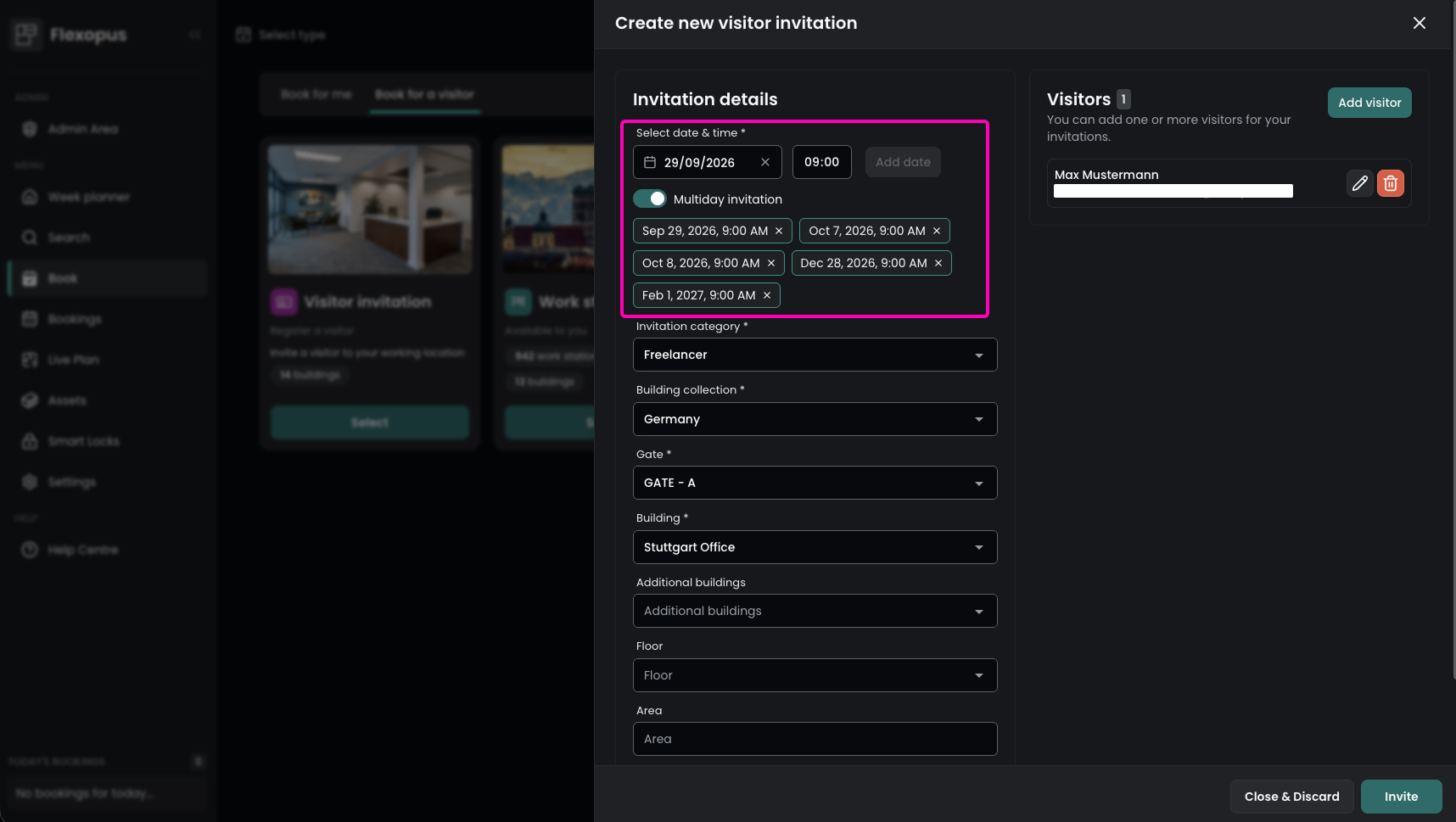
Planning recurring or multi-day visits is now much easier with the new multi-day visitor invitation option.
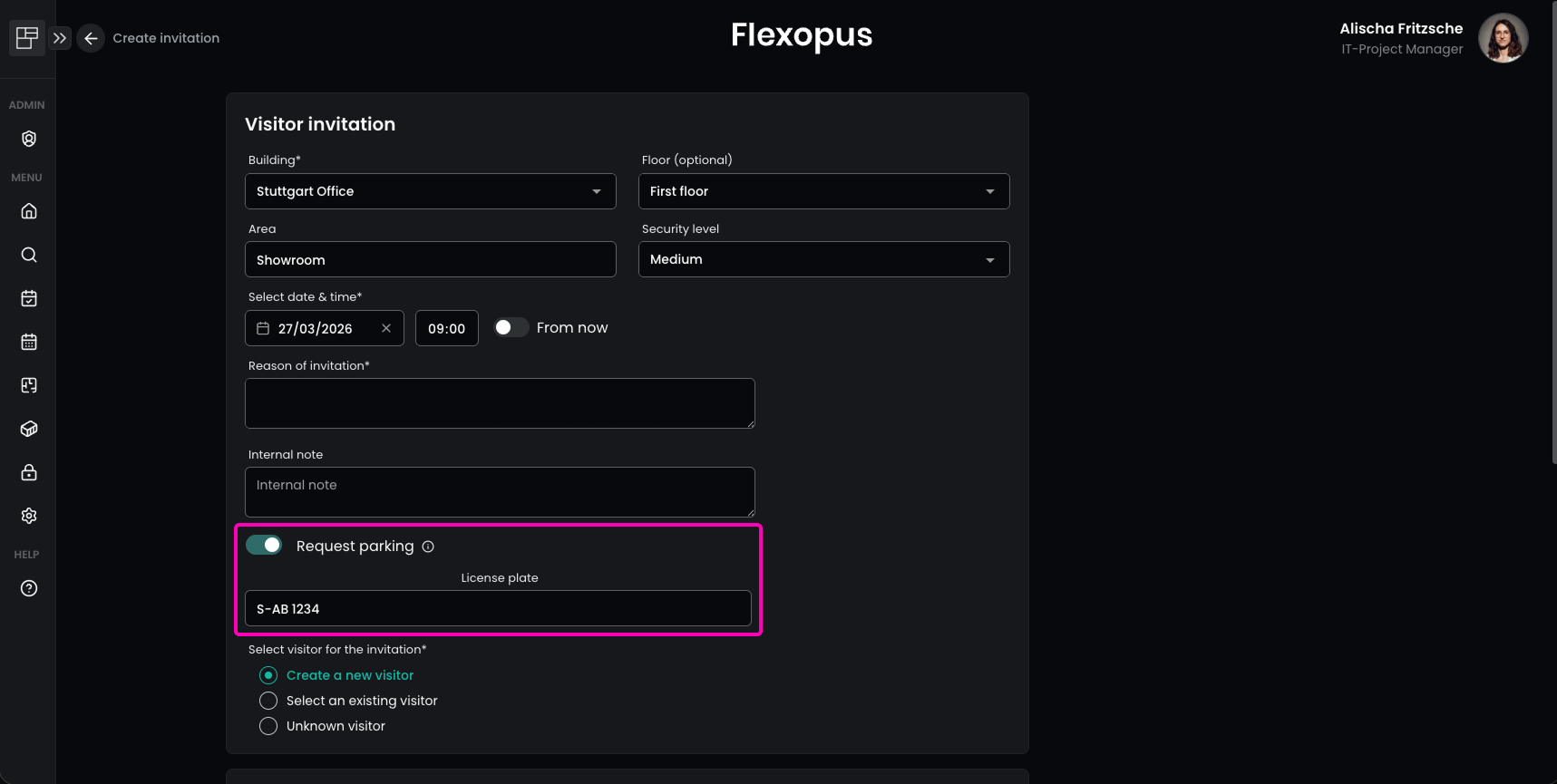
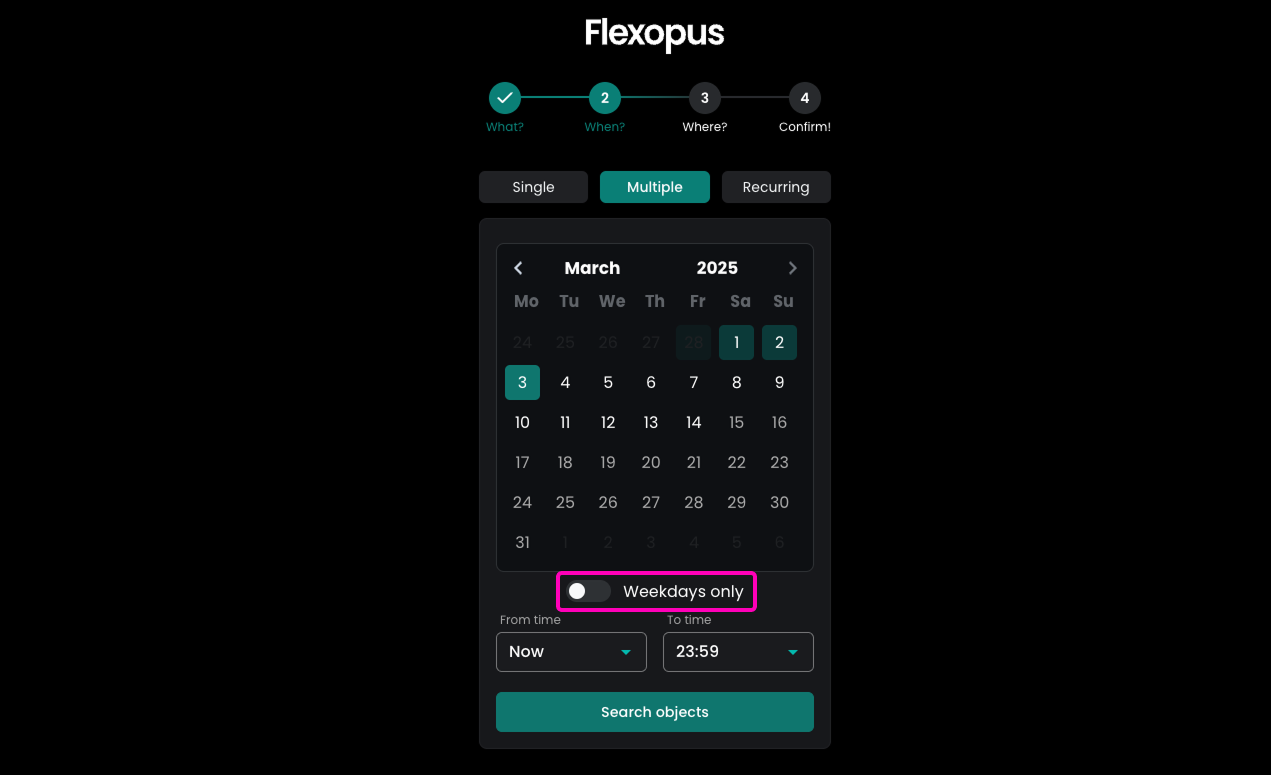
When creating a visitor invitation, users can enable the Multiday invitation option and select all days on which the visitor is expected. The selected dates do not need to be consecutive or follow a recurring pattern, providing maximum flexibility when planning visits.
This is especially useful for visitors who are expected on several individual days, as there is no longer a need to create a separate invitation for each visit.
Visitor Assets
Keeping track of items handed over to visitors is now easier with the new Visitor Assets feature.
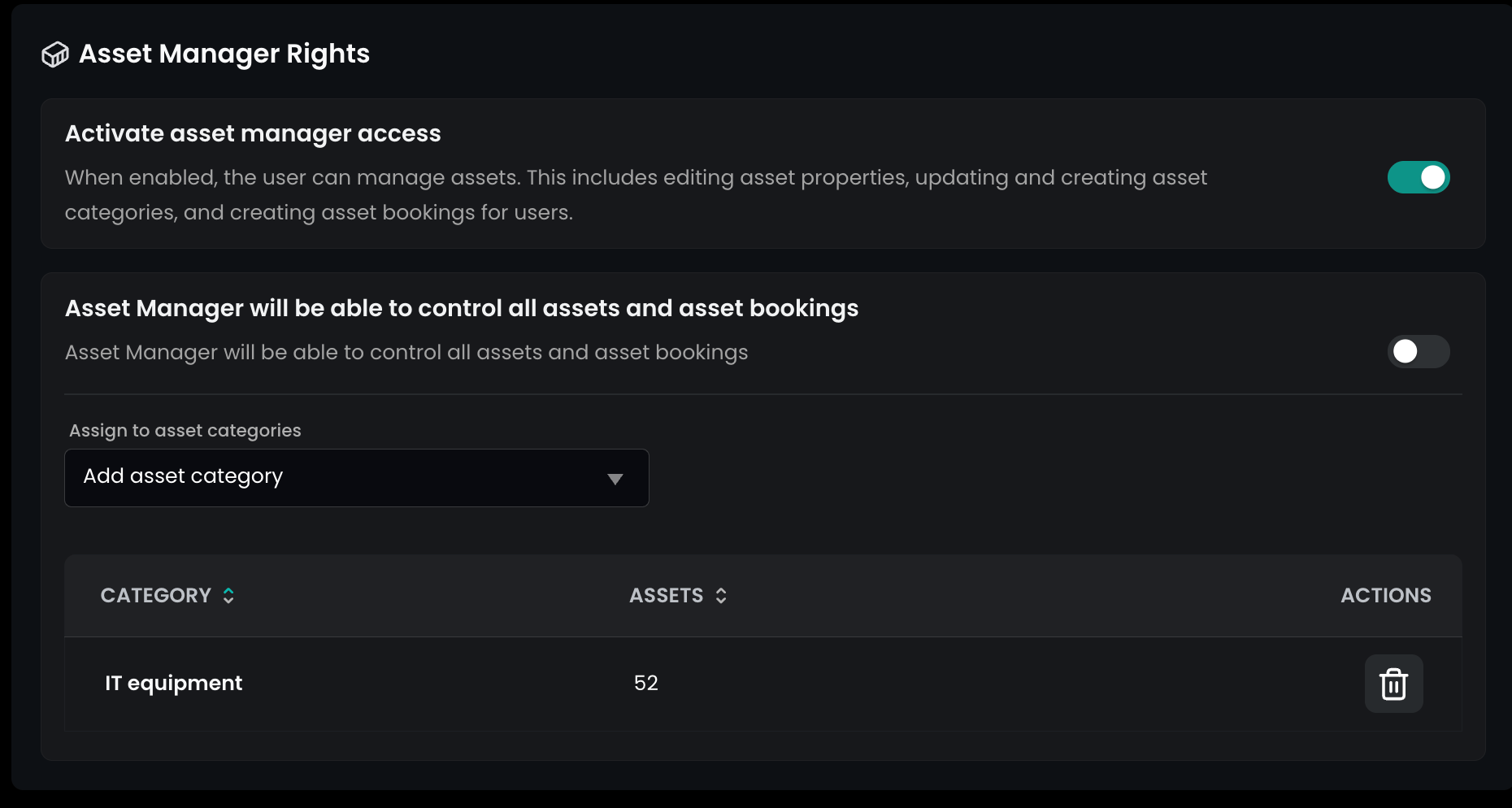
Admins can now keep track of items that are handed over to or brought in by visitors during their stay.
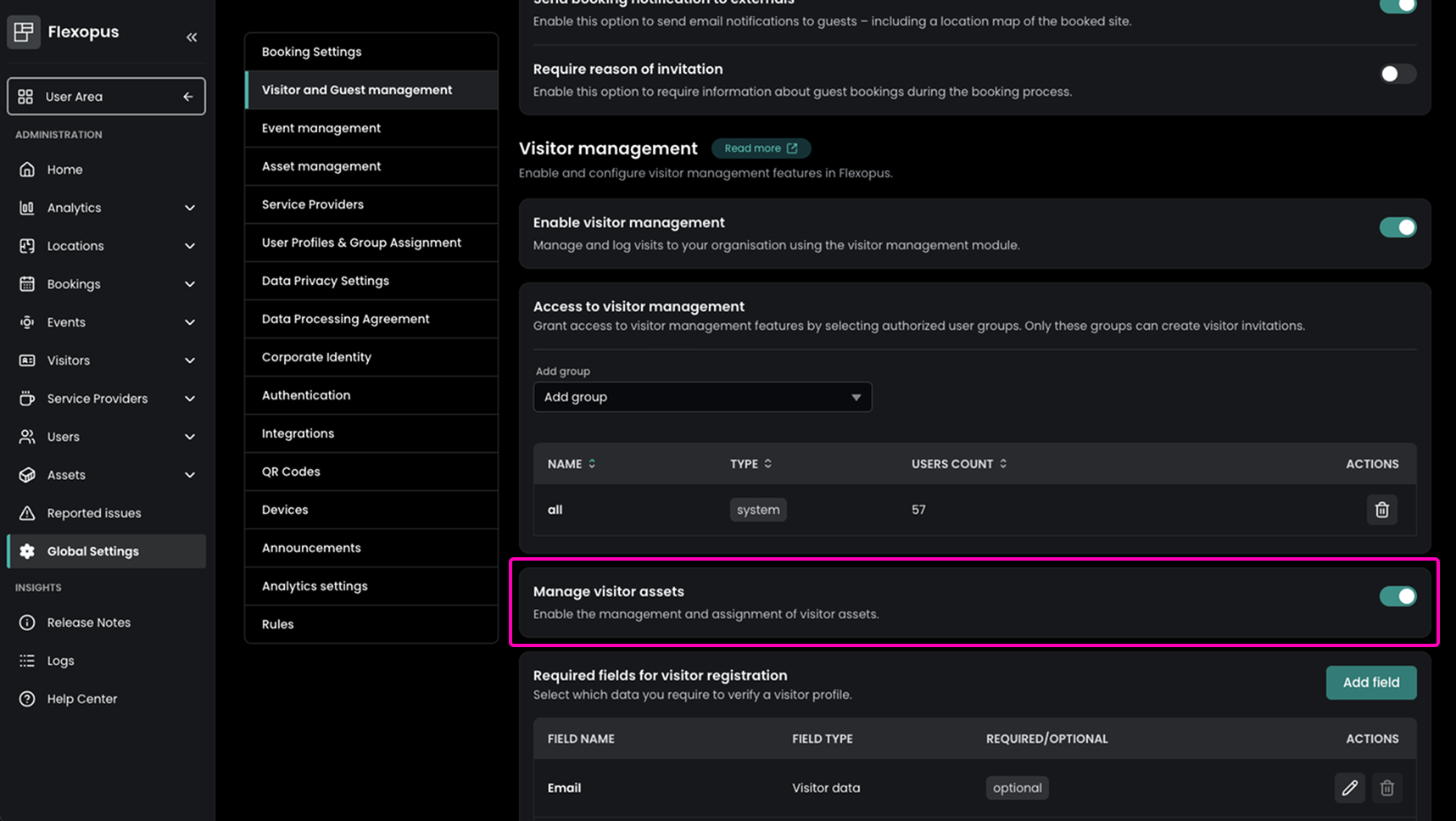
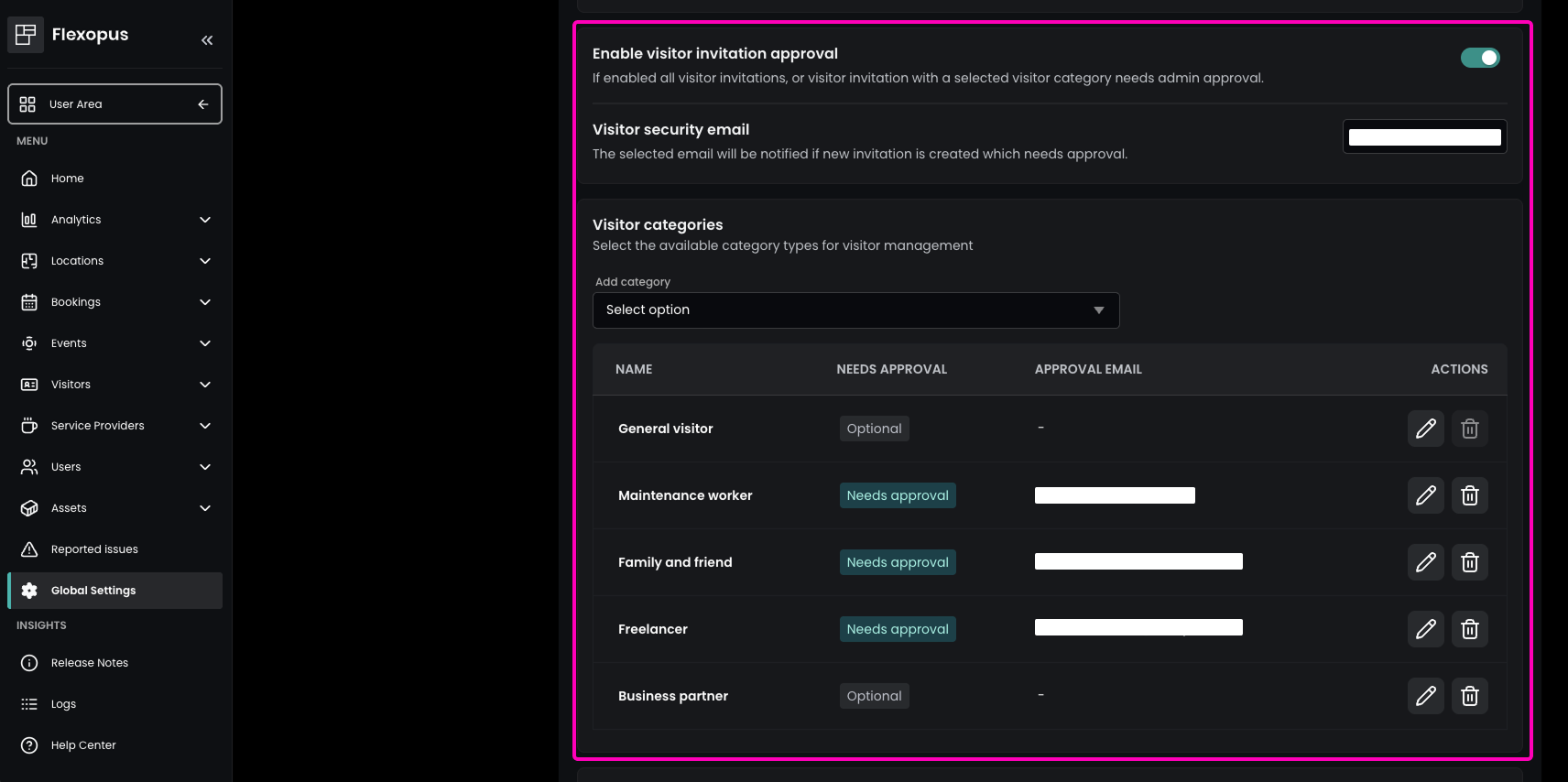
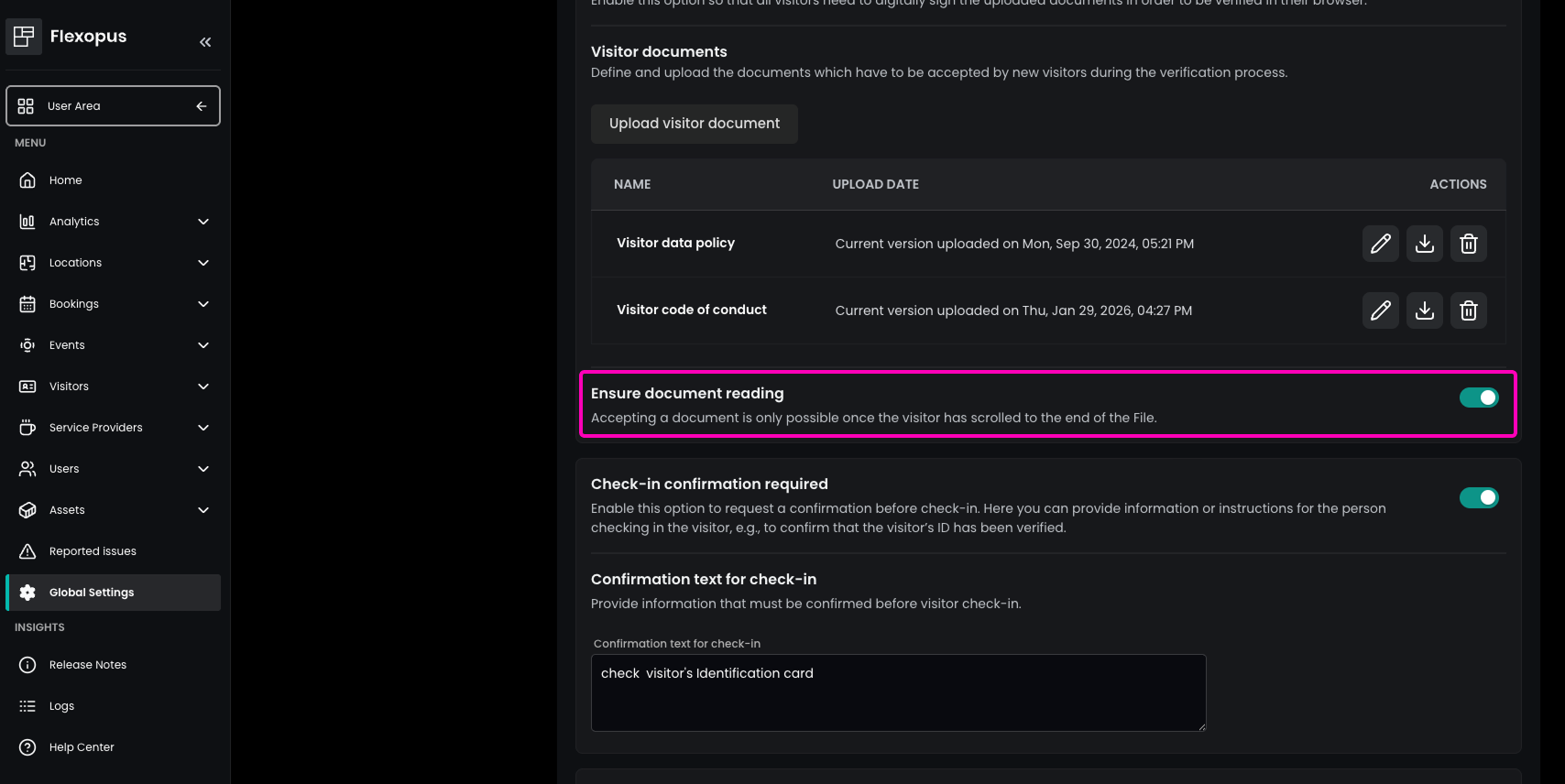
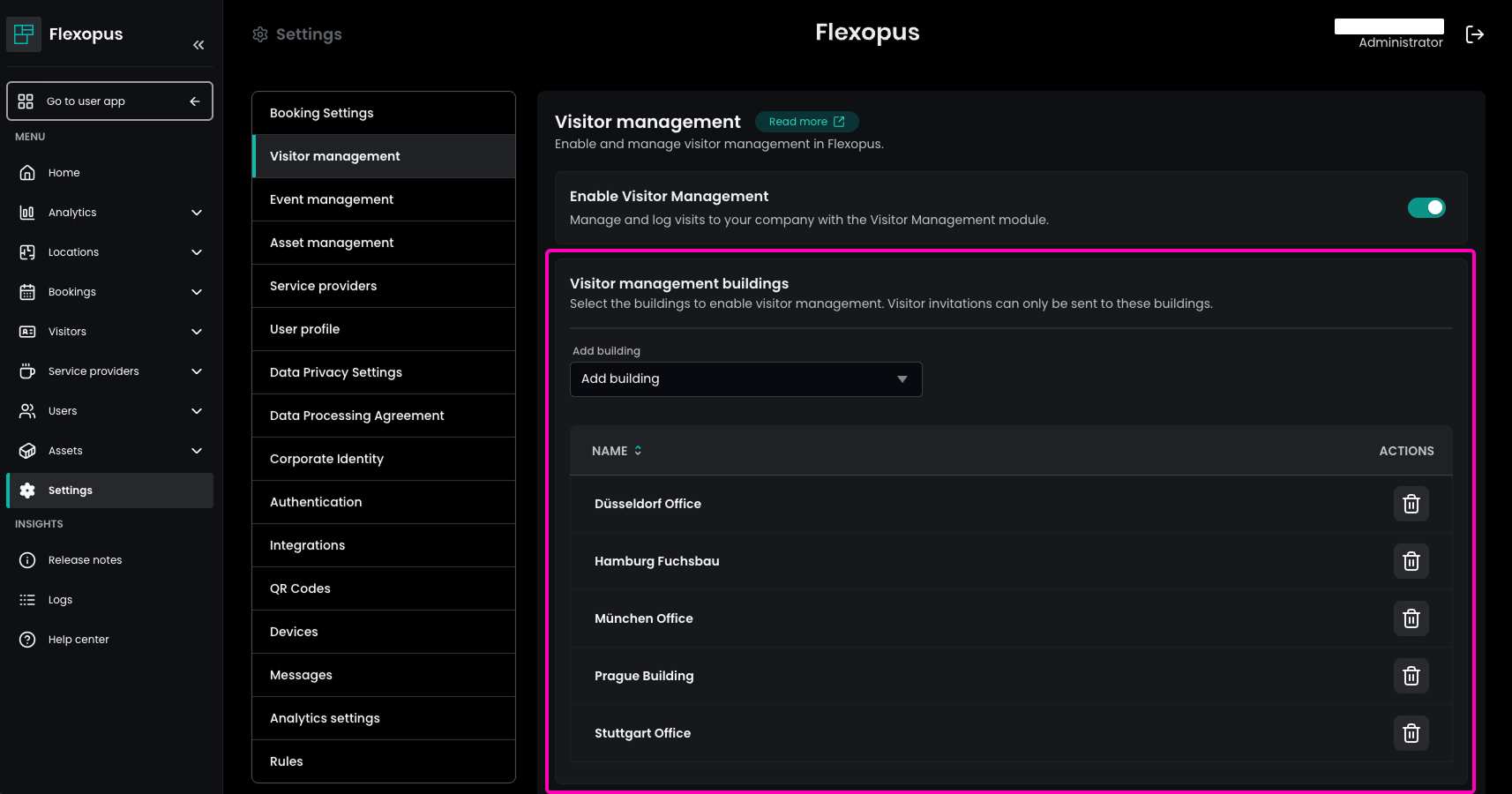
Administrators can activate the feature in the Admin Area under Global Settings → Visitor and Guest Management → Visitor Management by enabling Manage visitor assets.
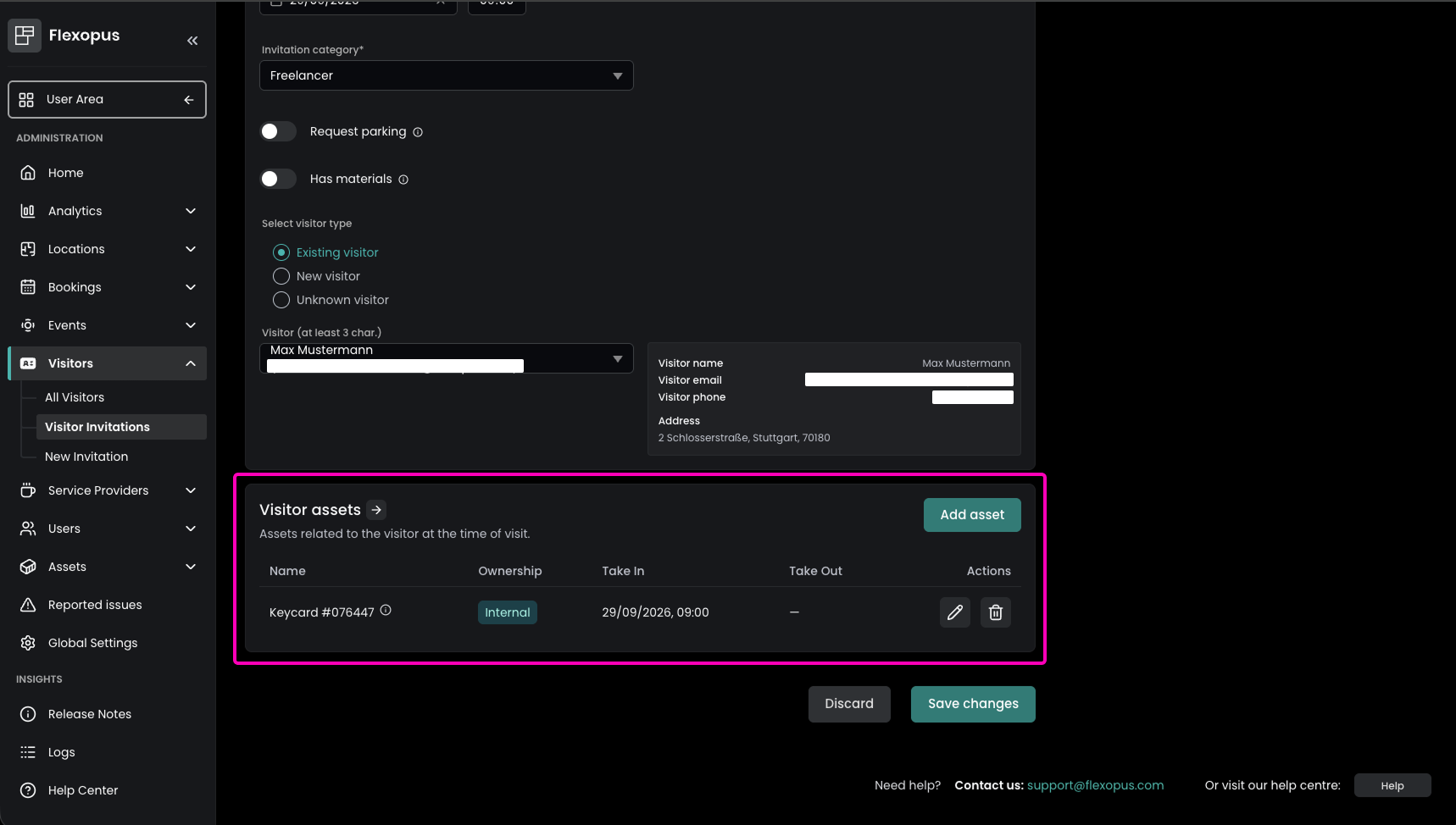
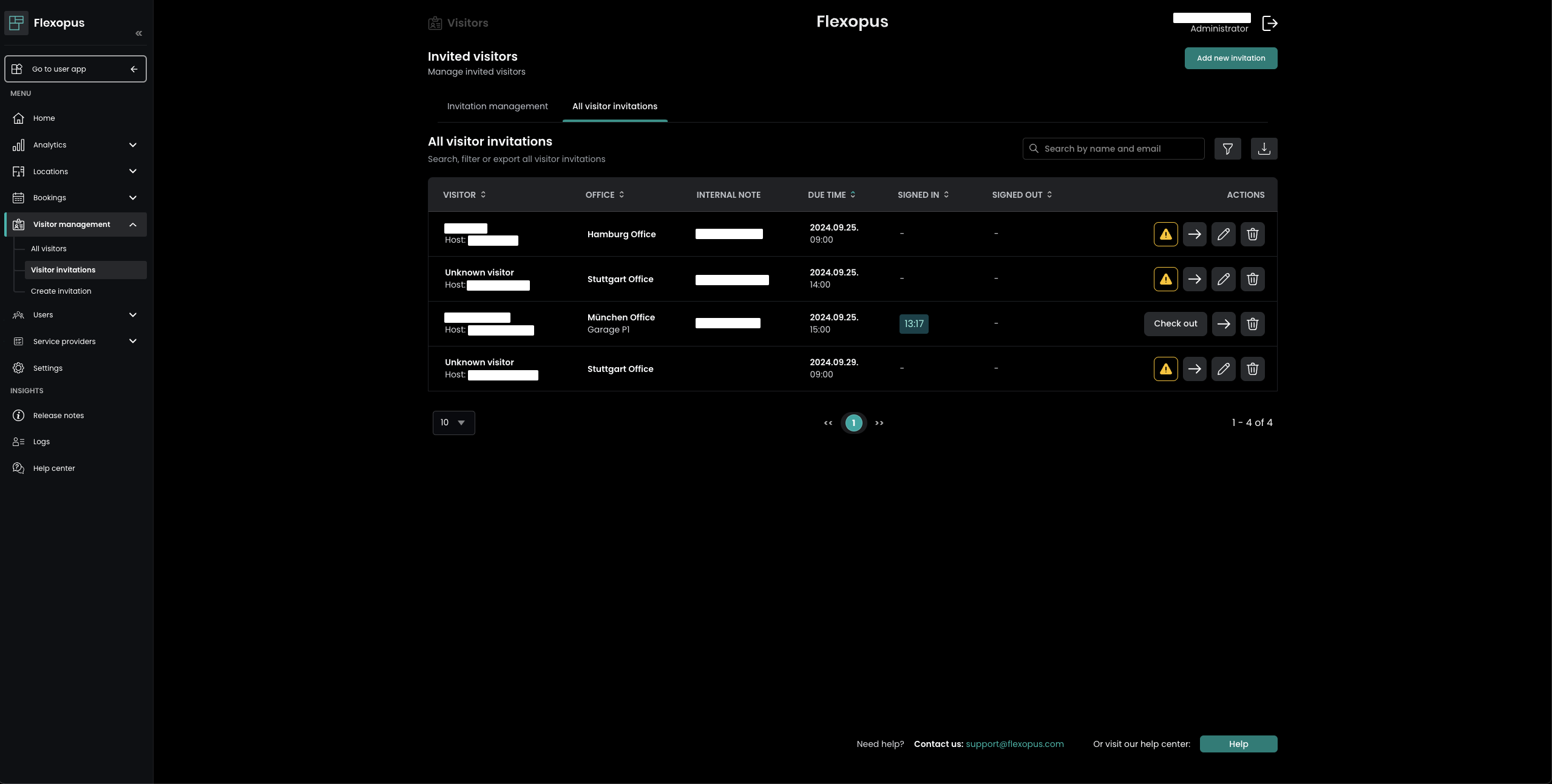
Once enabled, administrators with access to Visitor Management can add objects to a visitor invitation in the Admin Area under Visitor → Visitor Invitation after selecting the desired visitor. Depending on your use case, these can represent items handed out to the visitor, such as access cards or keys, or objects brought into the building by the visitor.
When an item is returned, it can be marked accordingly so that it no longer appears as outstanding for the visitor.
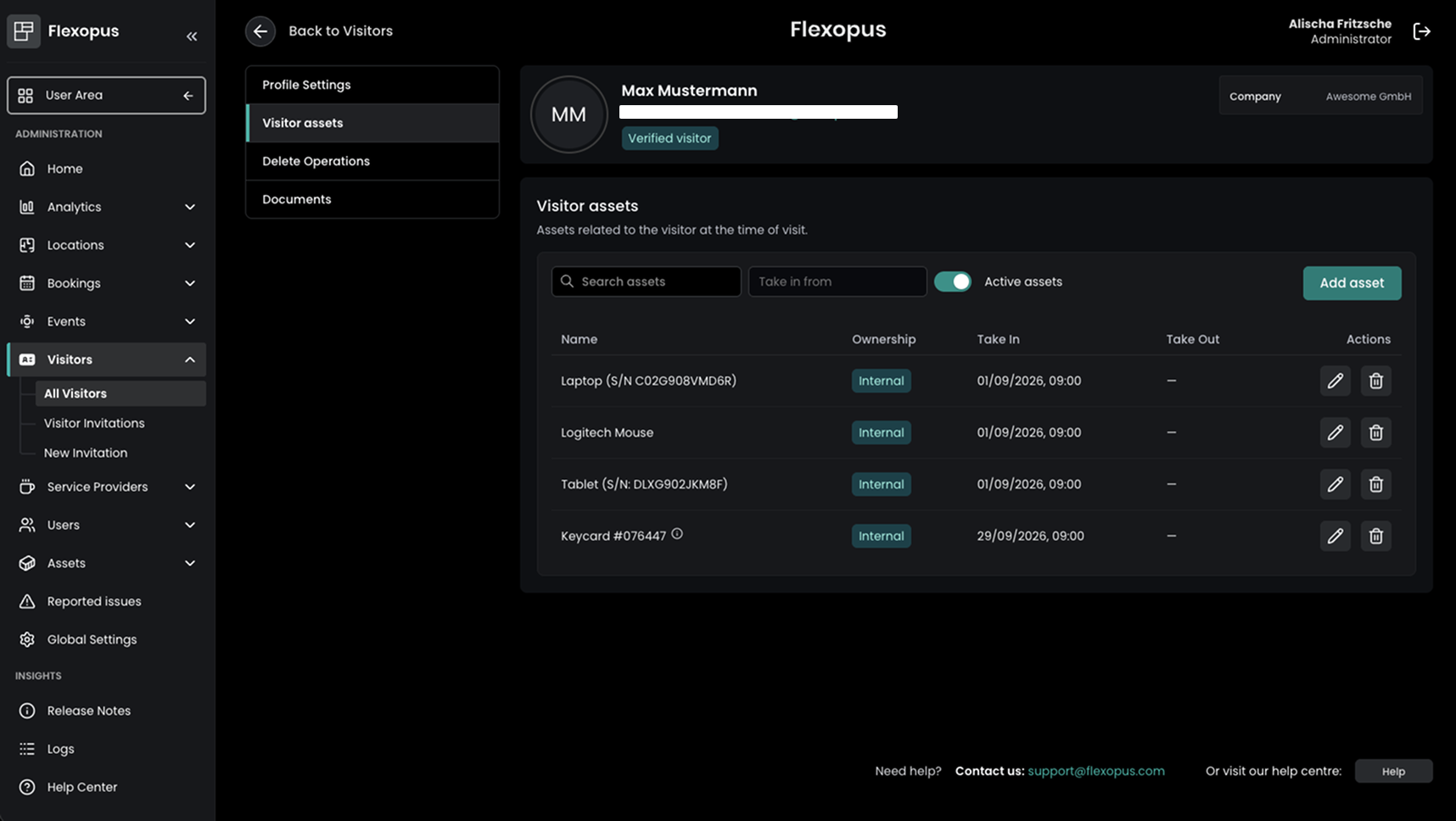
A overview of the objects associated with a visitor is available under Visitors → All Visitors → [select the desired visitor] → Visitor Assets. This makes it easy to keep track of which items have been issued and which still need to be returned.